|
$$PLAIN_TEXT_PREVIEW$$
Madaniya’s Monthly Newsletter
|
Dear colleagues, representatives of civil society organisations, We hope this finds you in good health and spirits. Below is our October newsletter, where we share the latest updates from Madaniya and developments across the Syrian civic space. Best wishes,
Madaniya’s Team
|
Updates on Madaniya’s Work
|
|
|
The Political Transition Observatory Project Madaniya, in partnership with The Day After organisation, continues to implement the Political Transition Observatory Project through a series of dialogue sessions held across various regions of Syria. These sessions form part of a national participatory process aimed at articulating civil society’s collective vision for reform priorities during the forthcoming transitional phase. Since early September, discussions have focused on the project’s six core themes: transitional justice and accountability, judicial reform, constitutional reform, security sector reform, economic reform, and elections. These topics are currently being explored through successive sessions taking place in five key regions — the North, South, East, Centre, and Coast — in addition to a number of virtual meetings designed to ensure broader participation from civil society actors across the country. The current phase of the project is set to conclude with the National Civil Conference in the first half of December, where the initial framework of indicators generated through these discussions will be presented as one of the project’s main outcomes. This will pave the way for continued dialogue to further refine and validate these indicators collaboratively, ultimately adopting them as a civic tool for monitoring the reform process in Syria. Through this effort, the project continues to strengthen an inclusive and participatory approach that empowers Syrian civil society to shape its collective vision for the priorities of the transitional period and the rebuilding of Syria’s future.
|
|
|
|
|
EU–Syria Day of Dialogue This year, Madaniya joined both the European Union and the Syrian Government in organising the EU–Syria Day of Dialogue, scheduled to take place on 15 November 2025. The event marks the first official platform bringing together the three parties — the European Union, the Syrian Government, and Syrian civil society — in a direct and comprehensive dialogue. Madaniya is a member of the Steering Committee alongside representatives from the European Union and the Syrian Ministries of Social Affairs and Labour, and of Foreign Affairs. The committee is responsible for overseeing preparations for the conference and ensuring the inclusivity of both its content and organisation. In partnership with the European Institute of Peace, Madaniya has also facilitated the preparatory consultations held ahead of the Day of Dialogue, in coordination with local civil-society networks across different Syrian regions. These consultations aim to ensure that the discussions reflect the genuine issues and priorities of Syrian civil society in all its geographic and social diversity. The Day of Dialogue will open with high-level representatives from the European Union, the Syrian Government, and civil society, followed by plenary and parallel thematic sessions addressing key topics such as reconstruction and recovery, peacebuilding and conflict resolution, transitional justice and accountability, the role of youth and women, democratic governance, and media freedom and civic space. This event represents a key milestone in establishing a new relationship between the European Union and Syria. It reaffirms the inclusion of civil society as an active partner in shaping the country’s future through an institutional dialogue that reflects the priorities and needs of Syrians during the transition and national recovery phase.
|
The European Union’s Policy Towards Syria: A Consultative Project in Partnership with the European Institute of Peace Madaniya, in partnership with the European Institute of Peace (EIP), has concluded a series of consultative sessions with Syrian civil-society organisations and actors as part of an extensive dialogue process held throughout September and October 2025. The initiative aimed to capture civil society’s perspectives and recommendations regarding the European Union’s future policy directions towards Syria. Alongside contributing to the EU’s internal deliberations on its new approach to Syria, these consultations formed part of the preparatory process for the EU–Syria Day of Dialogue — bringing together the EU, the Syrian Government, and civil society (previously known under the Brussels Conference framework). The process has helped establish an interactive consultative channel with Syrian civil society to define priorities and collective positions on the future relationship between the EU and Syria. The consultations included eight dialogue sessions — four virtual and four in-person — covering multiple Syrian regions across the North, South, East, Centre, and Coast, with broad participation from local organisations and Syrian experts. The discussions addressed a range of key thematic areas related to the future of EU–Syria relations, including political transition and governance, security, protection of civic space and civil-society operations, social cohesion and peacebuilding, transitional justice, economic recovery, and the return of refugees and internally displaced persons. The outcomes of these discussions will feed into two complementary processes: first, to inform the EU’s policy review on Syria through an internal report prepared by the European Institute of Peace for the EU; and second, to support the preparation of a dedicated report for the Day of Dialogue, to be presented during the upcoming conference as a participatory synthesis of Syrian civil society’s vision for the future of European engagement in Syria. This project represents a significant step towards strengthening institutional communication channels between Syrian civil society and the European Union, consolidating a participatory approach that contributes to shaping policies more responsive to Syria’s realities and the needs of its civil society.
|
Madaniya's Engagement with Ongoing Events
|
|

|
The United Nations Integrated Mission to Syria Madaniya, in cooperation with Crisis Action and several Syrian civil-society organisations, continues to implement a strategic advocacy plan aimed at influencing ongoing discussions within the United Nations system regarding the restructuring of its role in Syria. The objective is to ensure that any future UN arrangements are fairer, more inclusive, and genuinely reflective of Syrian civil society’s aspirations and vision for the political transition process. These efforts are carried out in partnership with leading Syrian institutions, including the Syrian Women’s Political Movement, the Syrian Centre for Media and Freedom of Expression, The Day After organisation, and the Syrian Legal Development Programme, alongside a group of independent Syrian experts who play a central role in shaping joint positions and proposals.
|
|
|
As part of this round of engagement, a meeting was held between the organising groups and the Syrian Ministry of Foreign Affairs to discuss the proposed integrated mission and civil society’s perspectives on it. Preparations are also underway for upcoming meetings with the UN Secretary-General António Guterres, the Under-Secretary-General for Political and Peacebuilding Affairs Rosemary DiCarlo, as well as several members of the Security Council, to present an independent Syrian vision for the future of UN engagement in Syria. These meetings form a key component of the ongoing advocacy efforts led by Madaniya and its partners to strengthen the presence of the Syrian civil voice within international decision-making circles and to ensure that any future process is grounded in principles of representation, transparency, and alignment with the priorities of Syrians themselves.
|
|

|
|
|
Madaniya’s Meetings with Syrian Actors As part of its efforts to broaden communication channels with local Syrian actors and strengthen national partnerships, Madaniya continues to hold meetings aimed at exploring opportunities for collaboration in civil and political work — particularly in areas undergoing social and administrative transformations.
|
Meeting with the Ministry of Social Affairs and Labour Madaniya held a meeting in Damascus with the Minister of Social Affairs and Labour and the Ministry’s team to discuss Circular No. 263, which outlines the approvals required for civil-society organisations to carry out their activities. The discussion addressed the reasons and context behind the activation of the circular, as well as the practical implications of its implementation — particularly regarding coordination mechanisms, approval procedures, and their impact on the work and partnerships of civil-society organisations within the country. The meeting also explored potential ways to facilitate the work of civic institutions in a manner that safeguards their independence while strengthening their role in serving local communities. This meeting forms part of Madaniya’s ongoing efforts to foster constructive dialogue between civil-society organisations and governmental bodies, contributing to the creation of a clearer and more enabling environment for civic action. The circular and its implications will remain among Madaniya’s key priorities in the coming period, as part of its continued follow-up on issues affecting the work of civil-society organisations in Syria.
|
Madaniya’s Meetings with International Actors As part of its ongoing efforts to strengthen dialogue and cooperation with international stakeholders engaged in the Syrian file, Madaniya continues to hold meetings with various international partners to discuss political and civic developments and explore avenues for supporting the priorities of Syrian civil society.
|
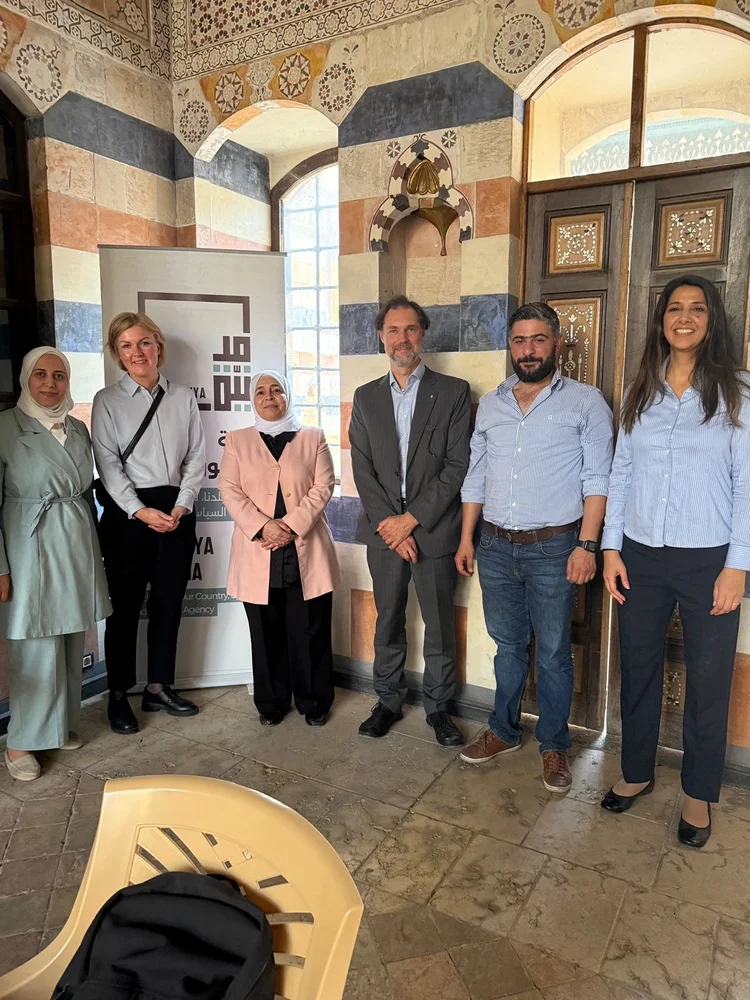
Meeting with the Folke Bernadotte Academy – the Swedish Government Agency for Peace, Security, and Development On 6 October 2025, Madaniya hosted a delegation from the Folke Bernadotte Academy (FBA) — the Swedish government agency dedicated to peace, security, and development — at its headquarters for a meeting focused on the role of Syrian civil society in forthcoming transition processes. The discussion centred on the opportunities and challenges surrounding civil-society participation in Syria’s transitional process, including issues related to women’s organising and youth empowerment, transitional justice, and the role of local initiatives in peacebuilding and restoring public life. Participants also explored comparative international experiences in political transitions and the lessons that could be adapted to the Syrian context to ensure broader and more effective civic participation. Madaniya presented its vision on the importance of engaging Syrian civic actors as principal partners in shaping the next phase, given their unique capacity to connect justice imperatives with social realities and to rebuild citizens’ trust in the political process.
|
Updates from member organisations
|
This section highlights the key achievements and recent developments in the work of Madaniya’s member organisations, along with events held at Madaniya’s headquarters in Damascus.
|
Joint Statement by Syrian Organisations on the Directive from the Minister of Social Affairs and Labour Several Madaniya member organisations, together with a group of Syrian civil-society organisations, issued a joint position paper in response to the Directive from the Minister of Social Affairs and Labour on 1 October 2025, which imposes new restrictions on the work of non-governmental organisations in Syria. The statement explained that the directive requires organisations to obtain prior authorisation to join unions or associations outside Syria and prohibits the receipt or transfer of funds without prior administrative approval — extending these restrictions to private institutions as well. The signatories expressed concern over the reactivation of Law No. 93 of 1958 as the regulatory framework, considering it a setback for the development of a conducive civic environment and a threat to the independence and societal role of civil-society organisations. The organisations called for suspending the restrictive provisions of Law No. 93 until the adoption of a new associations law, abolishing the prior-approval system, simplifying registration procedures, allowing organisations to freely build partnerships with external actors, and easing funding restrictions. A number of Madaniya’s member organisations, alongside other Syrian groups, contributed to drafting and signing the statement, including: Justice for Life, Dawlaty, Badael, the Syrian Centre for Policy Research, Musawat, Huquqiyat, Access Centre for Human Rights, Women Now, the Campaign for Syria, Seen for Peacebuilding, For Feminism, the Women’s Support and Empowerment Centre, Souriana Al-Amal, PÊL – Civil Waves, Transformative Pathways, Baytna, and The Day After. This statement reflects a unified position by Syrian civil society calling for the protection of civic space and the expansion of civil action as a fundamental pillar for building a free, pluralistic, and independent Syrian society. To read the full statement, visit the link provided.
|
Launch of the Executive Summary of the Syria Rased Network’s 2025 Electoral Observation Report On 20 October 2025, the Syria Rased Network held an event in Damascus to launch the summary of its findings from the 2025 electoral observation process. The event was organised by the Stabilisation Support Unit, the implementing partner of the Syria Rased Programme, and attended by a wide range of official and diplomatic representatives, as well as local and international organisations and media outlets. The event presented the key results of the field monitoring conducted during this year’s elections, which covered ten Syrian governorates and twenty-seven polling stations. The report noted that the establishment of the Supreme Electoral Commission reflected a positive direction towards building more professional and independent electoral institutions. It also highlighted that the electoral process was marked by a high level of organisation and openness to civil society and the media — a development described as a foundational step towards a more transparent electoral path. The presentation included calls to strengthen the legal framework governing elections to ensure the Commission’s independence and to involve civil society in drafting executive regulations and monitoring the electoral process. It also proposed the gradual development of the electoral-body system towards direct and inclusive elections, both inside and outside Syria. In addition, the report emphasised the importance of setting a legal ceiling for campaign spending and establishing a financial oversight unit to ensure fairness and accountability among candidates. The comprehensive final report is expected to be released in the coming period, following the completion of data analysis and field assessments, and will include practical recommendations to help improve electoral practices and support Syria’s political reform process. To read the full summary of the electoral observation results, visit the link provided.
|
|
|
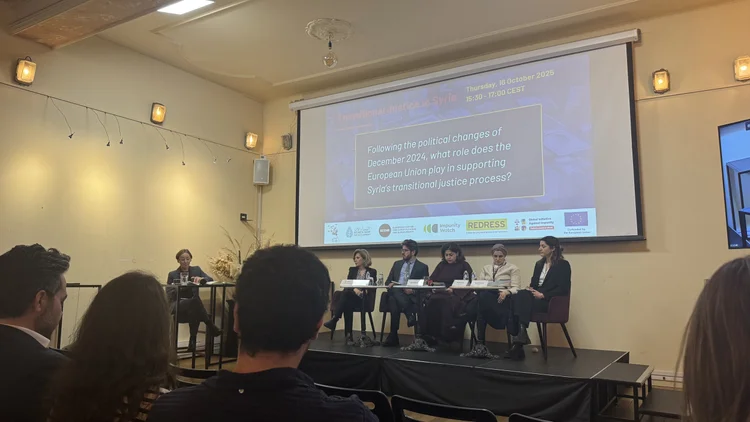
Transitional Justice Event in Brussels – 16 October Madaniya took part in the event “Transitional Justice in Syria: The Role of the European Union in Supporting the Justice Process”, held in Brussels in partnership with Women Now for Development and organised by members of the Global Initiative Against Impunity: REDRESS, the European Centre for Constitutional and Human Rights (ECCHR), and Impunity Watch, in collaboration with the INOVAS Network and the Taafi Initiative. The event brought together a range of Syrian and international organisations to discuss the potential role of the European Union in the post-political-transition phase in Syria — particularly in supporting a comprehensive transitional justice process that ensures truth-seeking, accountability, institutional reform, and guarantees of non-recurrence. Participants emphasised that justice is not limited to trials but also encompasses reparations for victims and the recovery and redistribution of stolen assets to benefit those affected. Discussions highlighted the importance of keeping victims and survivors at the heart of the process and ensuring that any future European policies are built in partnership with Syrians themselves — including civil-society organisations, victims’ associations, and feminist and community initiatives — so that the justice pursued truly reflects their experiences and responds to their needs. Participants also reviewed the extensive efforts undertaken by Syrian organisations over the years to document violations and preserve evidence, recognising these as the foundation for any future justice process.
|
|
|
|
Events at Madaniya Headquarters – Damascus
|
|
“Nonviolence Today” Event – Sullam Network
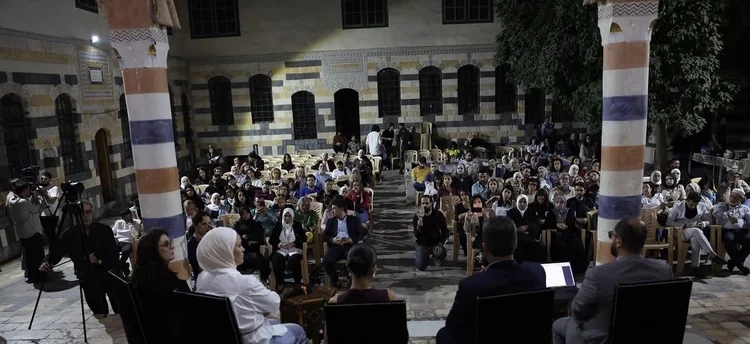
1–2 October On 1 and 2 October 2025, Madaniya hosted an event titled “Nonviolence Today”, organised by the Sullam Network, which specialises in issues of nonviolence and peacebuilding. The first day brought together Syrian activists and organisations working in this field for closed sessions that discussed the future of nonviolent action in Syria and ways to strengthen its role in community reconciliation and political transition. The second day convened members of the Sullam Network alongside international partners — including organisations, embassies, and donors — for an introductory meeting presenting the network’s vision, priorities, and opportunities for collaboration with international actors in support of Syrian peace efforts. Duroob Gatherings – Ettijahat: Independent Culture
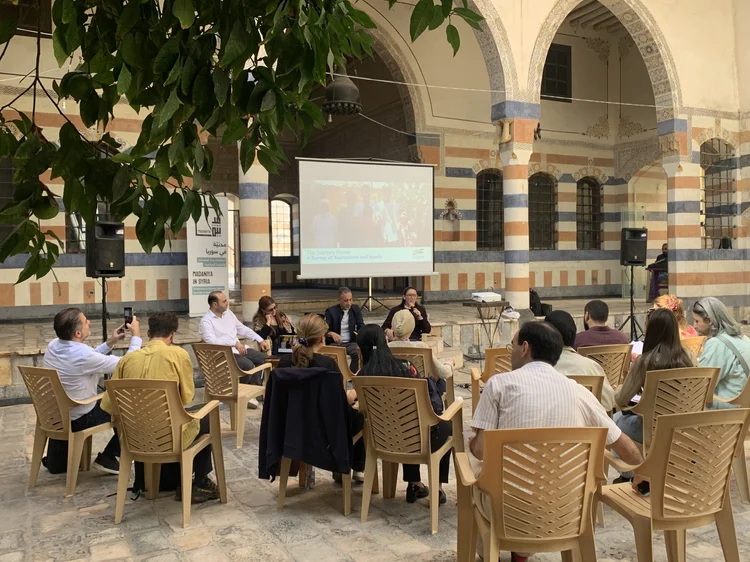
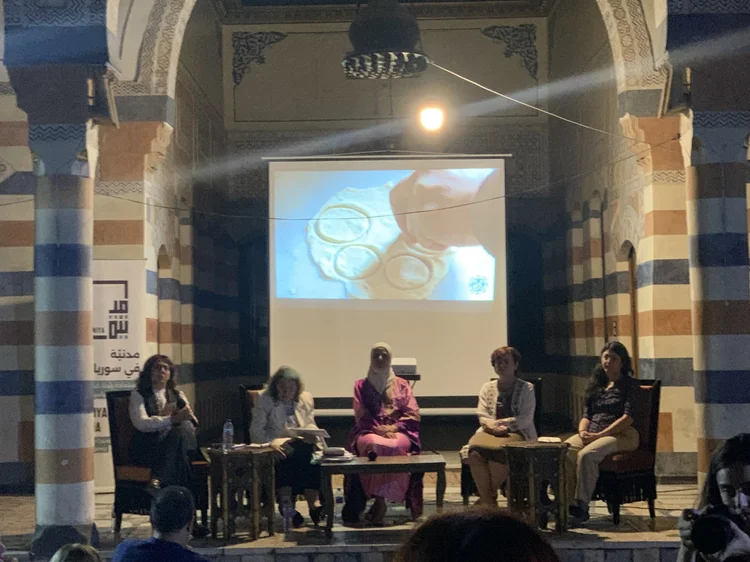
3 October On 3 October 2025, Madaniya hosted an event as part of the Duroob Gatherings programme, organised by Ettijahat – Independent Culture, under the title “A Space for Reflection on the Roles of Intangible Cultural Heritage in Syria.” The event provided an interactive dialogue space to discuss the role of intangible cultural heritage in rebuilding social bonds and strengthening a shared Syrian identity, with the participation of researchers, artists, and cultural practitioners from across different governorates. The discussion aimed to explore how cultural heritage can serve as a tool for expression and reconciliation in the post-conflict period, while opening a broader conversation on the relationship between culture, memory, and citizenship in Syria today. Reviving the Olive Tree – The Syrian Partnership and Alliance Council and the Nordic Countries
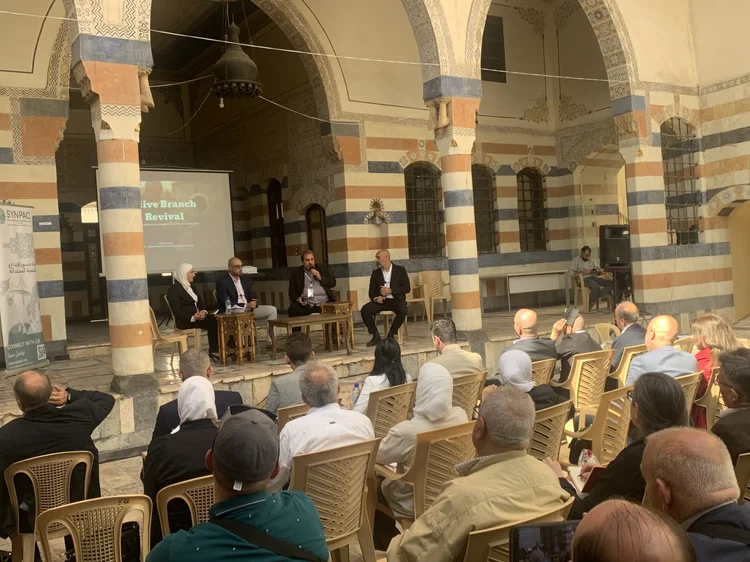
22 October On 22 October 2025, Madaniya hosted a symposium titled “The Olive Tree Revival Project,” organised by the Syrian Partnership and Alliance Council in cooperation with the Nordic Countries and with the participation of the Aga Khan Foundation for Development. The event aimed to highlight the significance of the olive tree in Syria’s cultural and economic memory, as well as its symbolic role in fostering stability and peace. Participants discussed potential avenues for collaboration between Syrian organisations, European partners, and the Aga Khan Foundation to rehabilitate Syria’s olive sector and strengthen its role as a key economic resource in supporting recovery and rebuilding livelihoods in rural areas. Screening and Discussion – Syria’s Stolen Children Documentary
Syria Campaign in Cooperation with Hurras and the Syrian Legal Development Programme
24 October On 24 October 2025, Madaniya hosted an event titled “Syria’s Stolen Children,” which featured the screening and discussion of a documentary film. The film documents the stories of hundreds of Syrian children who went missing during the years of conflict — whether through abduction, forced recruitment, or unlawful cross-border transfer. Through testimonies from families and survivors, the documentary exposes the systematic violations committed against children and the profound humanitarian impact of these crimes on Syrian families and society. It also highlights the ongoing efforts of civil and human-rights organisations to document these cases, advocate for families’ right to know the fate of their children, and ensure accountability for those responsible. Roundtable Discussion on the Return to Syria Report – Karam Foundation
30 October On 30 October 2025, Madaniya hosted at its Damascus headquarters a roundtable discussion organised by Karam Foundation to present and debate its 2025 report titled “The Journey Home: Insights into Syrian Refugees’ Aspirations and Challenges to Return.” The discussion brought together representatives from ministries, international actors, and civil-society organisations to examine the report’s findings, which analysed the intentions of Syrian refugees in Turkey regarding return and the factors influencing their decisions — including security, social, and gender-related barriers. Participants also explored ways to translate these findings into practical policies that promote voluntary and safe return, strengthen social cohesion, and support reconstruction efforts in Syria.
|
In this section, we highlight the latest reports and updates released by Syrian organisations or concerning Syria over the past month.
|
|
|
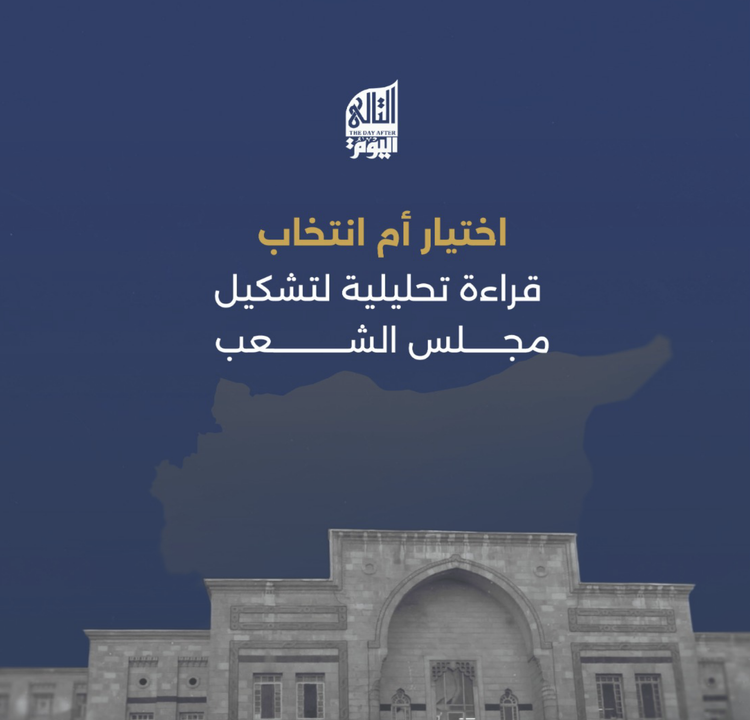
New Analytical Paper: “Selection or Election? A Reading into the Formation of the People’s Assembly” – The Day After The Day After organisation released a research report titled “Selection or Election?” analysing the formation of the Syrian People’s Assembly during the current transitional phase. The report provides an analytical reading of the legal and political frameworks governing the electoral process and highlights the challenges surrounding the Assembly’s establishment in terms of legitimacy, representation, and selection mechanisms. The report argues that the formation of the People’s Assembly was not based on a free and fair electoral process ensuring broad participation and transparency, but rather on political and administrative arrangements that limited genuine popular representation. It notes that the organisation of electoral bodies and constituencies was conducted through a special decree under the supervision of a Supreme Electoral Commission appointed by the President of the Republic — reflecting the continued concentration of executive power in managing the political process. The report also points out that several Syrian governorates, including Hasakeh, Raqqa, and Sweida, were left without effective representation in the Assembly, undermining its national inclusiveness and raising questions about the criteria for geographic and political representation. It further highlights the absence of effective mechanisms to challenge results, weak legal safeguards for electoral independence, and the decline in women’s participation compared to desired levels in new legislative institutions. The paper offers a set of recommendations to ensure a more credible electoral process in the future, including revising the Constitutional Declaration to guarantee the separation of powers and judicial independence, establishing an independent electoral commission free from political influence, developing the political parties law to expand civic participation, and ensuring that women hold no less than 30 percent of seats in legislative bodies. It also underscores the importance of civic monitoring and parliamentary transparency by enabling civil-society organisations to access information and legislative deliberations and to take part in assessing parliamentary performance — thereby strengthening public trust between citizens and elected institutions. To read the full report, visit the link provided. |
|
|
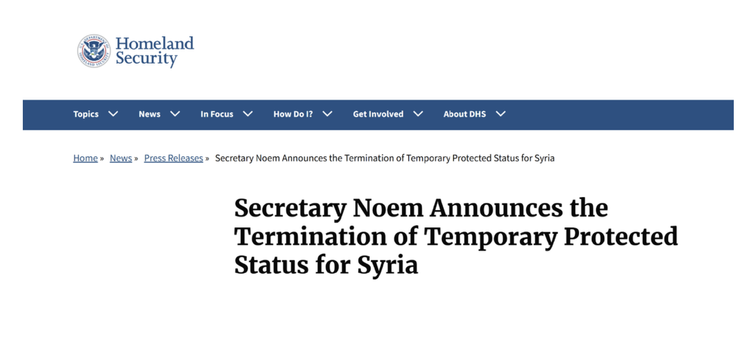
Report: “Ending Temporary Protected Status for Syrians – A Call to Extend Protection for Six Months Amid Ongoing Instability” – Syrian Center for Justice and Accountability The Syrian Center for Justice and Accountability released a report titled “Towards an Open-Ended Temporary Protection for Syrians,” responding to the decision issued by the U.S. Department of Homeland Security on 19 September 2025 to terminate the Temporary Protected Status (TPS) granted to Syrians, effective from 30 September 2025. Under this decision, Syrians benefiting from TPS have until 21 November 2025 to voluntarily leave the United States or secure alternative legal pathways to remain. The policy affects more than 6,000 Syrians who have resided in the U.S. for years — many of them for over a decade. The report warns that this abrupt termination places thousands of Syrians at risk of being returned to a country that remains unsafe, where ongoing violations, economic collapse, and widespread violence make any current return neither voluntary nor humane. The Center argues that the decision contradicts fundamental principles of international law, particularly the principle of non-refoulement, which prohibits returning individuals to places where they may face persecution or danger. The report calls on the U.S. government to reconsider the decision and extend temporary protection for at least six additional months, while developing more sustainable mechanisms that allow affected Syrians to maintain stable legal status until return to Syria becomes safe and dignified. It also underscores the importance of international support for advocacy efforts aimed at ensuring legal and humanitarian protection for Syrians abroad, amid the ongoing instability within the country. To read the full report, visit the link provided. |
|
|
|
|
|
| |