|
$$PLAIN_TEXT_PREVIEW$$
Madaniya’s Monthly Bulletin
|
|
Dear colleagues and representatives of civil society organisations, We hope you have had an excellent and productive month. At Madaniya, we will send monthly bulletins to share the latest developments with you. Below is our bulletin for May 2024. With our best wishes, Madaniya’s team.
|
Updates on Madaniya’s Work
|
|

|
Strengthening the national dialogue on the political process in Syria in accordance with Security Council Resolution 2254
|
|
|
|
|
The first phase of the project Strengthening the national dialogue on the political process in Syria in accordance with Security Council Resolution 2254, was launched in May in coordination with a group of civil society institutions inside Syria. The first round of project dialogues was held at the local level in As-Suwayda, Rural Damascus, Hama, Idlib, Azaz, Qamishli, and Deir ez-Zor. Sessions are scheduled to continue in the coming weeks in Raqqa, Efrin, Damascus, Aleppo, and Lattakia, as well as in neighbouring countries and the diaspora. A wide range of civil actors participated in these sessions, including representatives of member institutions of Madaniya and key individuals in each region. The discussions focus on the political process in its general form, its sticking points, and approaches to activate it, while delving into its basic components in accordance with Security Council Resolution 2254, specifically regarding the transitional governing body, the constitution, and elections. The discussions last for two days in each region and they are based on local realities and the outcomes of working within it. The project aims to develop a vision that reflects the aspirations of a wide group of Syrians who believe in the necessity of a political transition towards freedom, justice, and democracy, regardless of their various political and ideological affiliations and geographical distribution. With the escalation of the popular movement in many regions within Syria's various geopolitical divisions, the question of a political solution capable of resolving the country's current impasse has become a central issue in societal thinking and discussion. Madaniya seeks to address this question by working with a broad range of Syrian civic actors across all regions to facilitate discussions that aim to strengthen the national dialogue at the local level regarding the implementation of Security Council Resolution 2254 from a Syrian perspective, as an entry point to a political solution based on the current reality. The project's work plan is divided into two main phases: the first phase focuses on facilitating dialogues at the local level, while the second phase seeks to build broader cross-local consensuses. The advisory team leading the dialogue process will collect the results of local discussions and provide a critical comparative analysis, reviewing the most important agreements and gaps regarding the roadmap for the expected political solution. The results of this phase will be presented at Madaniya’s annual conference, scheduled for September of this year. The outcomes of the first round of discussions will determine the subsequent steps in the project, specifically whether to move to the second phase to build cross-local consensus or to engage in additional rounds of local discussions to establish stronger foundations for the second phase.
|
Madaniya’s Engagement with Ongoing Events
|
|
The Eighth Brussels Conference on Syria and the Region
|
|
|
|
On May 27, 2024, the Ministerial Session of the Eighth Brussels Conference to Support Syria and the Region was held in Brussels as a closed session with the main stakeholders involved in the Syrian crisis, attracting a diverse group of international donors. Madaniya, represented by its Chief Executive Officer, participated in the session, which saw a noticeable decline in funding and support pledges compared to previous years. Participating countries and bodies provided financial pledges in the form of grants and soft loans amounting to 7.5 billion euros to finance humanitarian and early recovery needs in Syria and neighboring refugee host countries, with 3.9 billion euros allocated for the year 2024. The conference also revealed a clear division in the positions of the attending countries regarding developments in the political situation in Syria and its regional and international consequences, specifically concerning the return of refugees. The decline in financial pledges reflected the increasing complexities and challenges in the positions of the countries concerned with the Syrian issue. Statements from neighboring countries hosting Syrian refugees, particularly Lebanon and Jordan, carried a clear and explicit messages to the European Union about the need to assume responsibility for the Syrian refugee issue by providing necessary support. These countries indicated that policies of forced return or ceasing services to refugee groups would be the alternative if support was not forthcoming. Conversely, some countries, including many EU member states, argued that conditions in Syria were still risky and unsuitable for the safe return of refugees, citing ongoing human rights violations and holding Syrian President Bashar al-Assad responsible. This division reflected broader disagreements about the best ways to address the Syrian crisis. Some countries asserted that the political process in accordance with Security Council Resolution 2254 is the most appropriate way to address the crisis. In contrast, others believed that the situation required accepting the status quo and strengthening diplomatic initiatives to find a political solution, alongside taking immediate practical measures to address the deteriorating humanitarian and economic conditions through more sustainable interventions. You can listen to the statements of various countries and parties, including representatives of Syrian civil society, at the ministerial session through the following link.
|
We highlight in this section the latest reports and updates issued by Syrian institutions or about Syria this month.
|
|
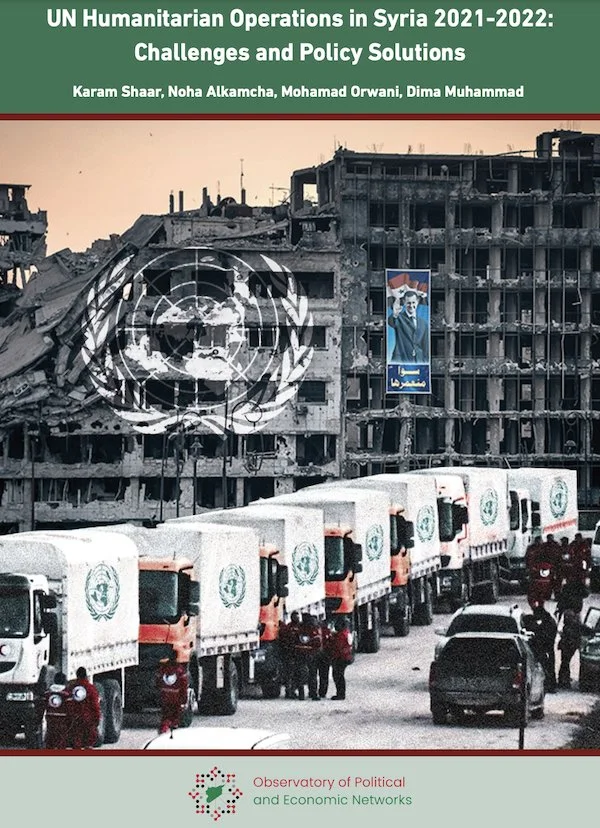
UN Humanitarian Operations in Syria 2021-2022: Challenges and Policy Solutions A report from the Observatory of Political and Economic Networks and the Syrian Legal Development Program
|
|
|
|
|
|
|
The following report reveals that the United Nations is increasingly cooperating with individuals close to the Assad regime and organisations linked to human rights violations. In 2022, the Observatory of Political and Economic Networks and the Syrian Legal Development Program conducted an analysis of the top 100 Syrian suppliers to the United Nations from 2019 to 2020. Utilising various data sources, they assessed the suppliers' connections to human rights violations. This study not only updated previous analyses but also included new assessments covering the procurement risk levels from 2021 to 2022, the transparency of public suppliers, and the extent of supplier concealment. The findings revealed a decrease in UN purchases from Syria, coupled with an increase in purchases from high-risk suppliers, including those owned by sanctioned individuals. The report shed light on significant transparency and accountability issues within UN operations in Syria, particularly concerning human rights violations and aid diversion. Recommendations directed towards donor countries and the United Nations emphasised the importance of maintaining or increasing aid, demanding better compliance with humanitarian standards, enhancing transparency, and avoiding purchases from high-risk, state-affiliated suppliers. You can read the summary of the report in Arabic through the link You can read the full report in English through the link To view a map of the top 100 Syrian suppliers from the public and private sectors to various United Nations agencies in 2020-2021, go to the available link.
|
|
|
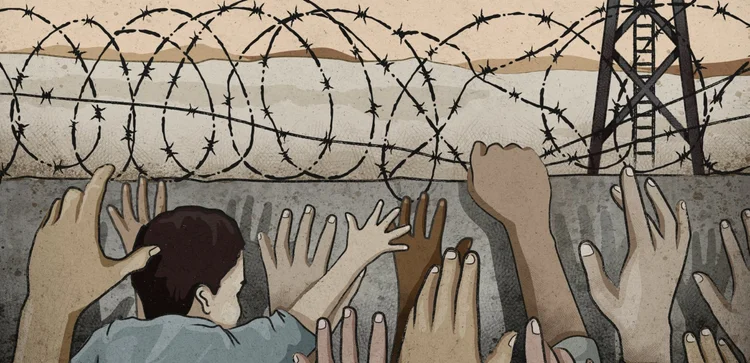
Mass death, torture and other violations against people detained in the aftermath of the Islamic State defeat – Amnesty International report |
|
|
|
|
Amnesty International issued a new report highlighting crimes of detention and torture in prisons in northeastern Syria, run by the Syrian Democratic Forces. The report stresses the responsibility of the coalition, which was formed under the leadership of the United States to defeat ISIS, to respect the human rights of all detainees. In the wake of the territorial defeat of the Islamic State (ISIS), detainees in northeastern Syria face systematic abuses, including mass deaths due to inhumane conditions. Amnesty International draws attention to these gross human rights violations and the urgent need for intervention. Read the full report through the link
|
Updates about Member Organisations
|
In this section, we typically spotlight the achievements and developments in the work of member civil institutions.
|
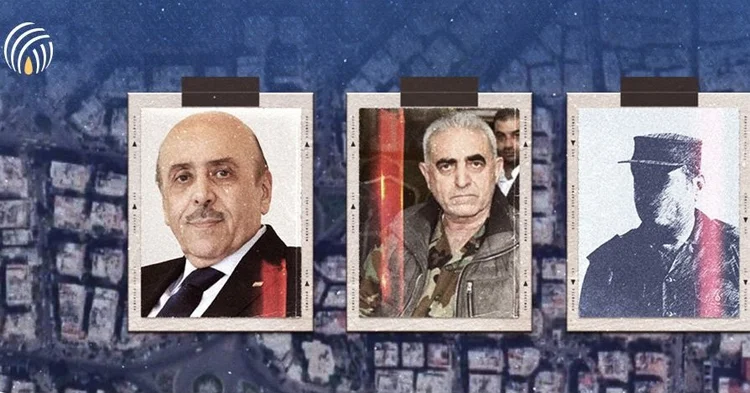
Three senior Syrian intelligence officers were sentenced in absentia to life imprisonment - Al-Dabbagh case On May 21, a historic case was opened before the Paris Criminal Court. After a seven-year investigation conducted by the War Crimes Unit at the Paris Judicial Court, the court brought charges for war crimes and crimes against humanity against Ali Mamlouk, a close advisor to Bashar al-Assad and former head of the National Security Office; Jamil Hassan, the former director of the Syrian Air Force Intelligence Service; and Abdul Salam Mahmoud, former head of the investigations department at the Mezzeh Military Airport in Damascus. In the absence of the defendants on French soil, the trial took place according to the legal rules of a virtual trial (in absentia) In October 2016, Obaida Dabbagh, the victims' brother and uncle, filed a lawsuit in France with the support of the International Federation for Human Rights, the Human Rights League, and the Syrian Center for Media and Freedom of Expression following the disappearance of Patrick and Mazen Dabbagh. On May 24, the court issued a historic ruling, sentencing Ali Mamlouk, Jamil Hassan, and Abdul Salam Mahmoud to life imprisonment on charges of complicity in war crimes and crimes against humanity in the Al-Dabbagh case. Read more about the case on the website of the Syrian Center for Media and Freedom of Expression
|
|
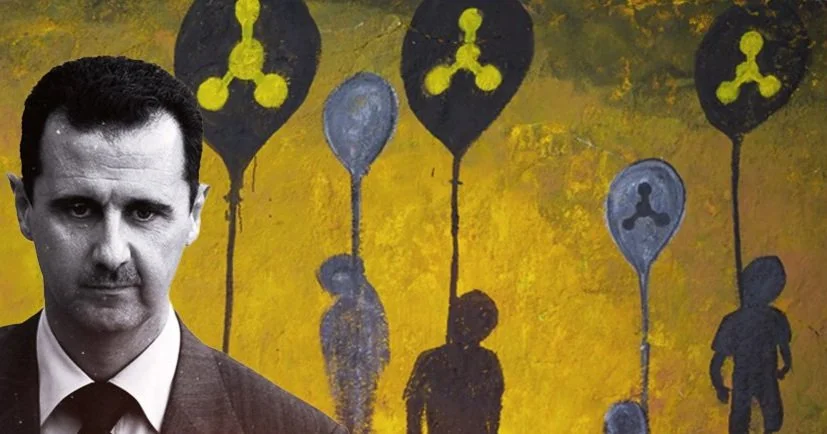
A joint statement by Syrian and international civil society organisations and victims’ associations in support of the investigation of Bashar al-Assad regarding the chemical attacks
|
|
|
|
|
|
|
Syrian and international civil society organisations, including the Syrian Center for Media and Freedom of Expression, the White Helmets, the Syrian Legal Development Program, Justice for Peace, the Syrian American Council, and associations of victims and survivors, issued a joint statement calling for justice and accountability for survivors and victims of chemical attacks in Syria. Despite extensive documentation of these attacks and investigations by the United Nations and the Organisation for the Prohibition of Chemical Weapons, which identified the Syrian regime as the perpetrator, recent efforts by French judges to issue arrest warrants against President Bashar al-Assad and other senior officials for their role in the 2013 chemical attacks on Douma and Eastern Ghouta are being challenged by the French National Anti-Terrorism Prosecutor's Office, which argues that Assad is immune as a sitting head of state, undermining the pursuit of justice and accountability for these heinous crimes You can read the full statement through the link
|
| | |
Comments