|
$$PLAIN_TEXT_PREVIEW$$
Madaniya’s Monthly Bulletin
|
Dear colleagues, we hope that you had a productive month. At Madaniya, we will be sending monthly bulletins to share the latest developments within Madaniya and the Syrian Civic Space with you. Below is our bulletin for March 2024. With our best wishes, Madaniya’s team.
|
Updates on Madaniya’s Work
|
|
|
Madaniya’s Working Groups Meetings In continuation of the discussions that took place at the Madaniya inaugural conference in June 2023, working groups within Madaniya were launched in December 2023, based on the priorities that emerged from these discussions. This March, we proceeded with the third round of convenings for the work groups, and these meetings are expected to continue to be held around the priorities of the Syrian Civic Space.
|
|
|
|
|

|
Syria Strategy Project Launch
|
|
|
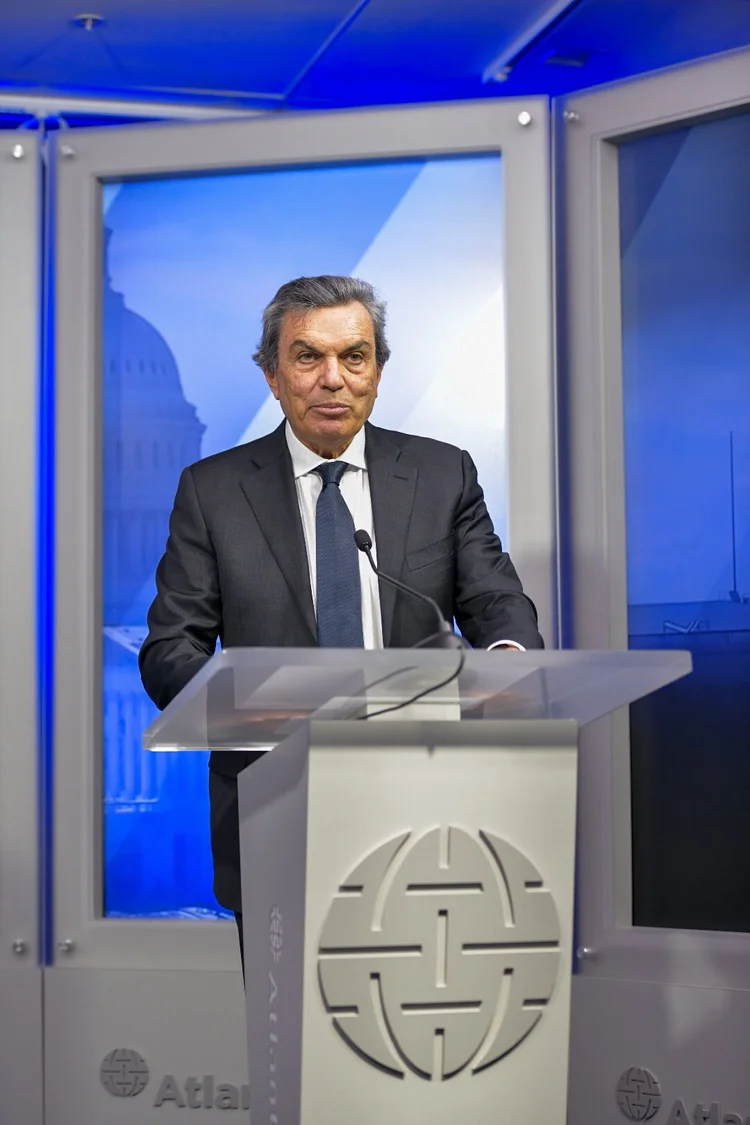
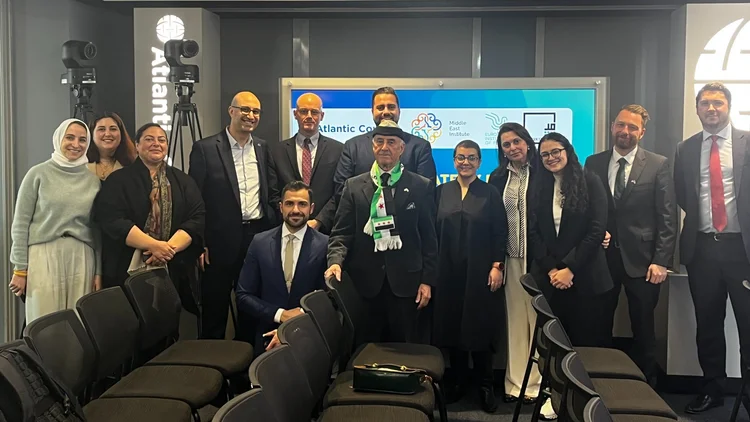
Coinciding with the thirteenth anniversary of the start of the protests in Syria, Madaniya, in partnership with the Atlantic Council, the Middle East Institute, and the European Peace Institute, launched the Syria Strategy Project on the eighteenth of this month. The event took place in Washington, DC, where speakers and decision-makers from the United States, Europe, and the Middle East gathered to inaugurate the strategy aiming to develop holistic and sustainable solutions to the Syrian crisis. As a membership-based organisation, we recognise that Syrian civil society, including Madaniya’s member organisations, has consistently been at the forefront, not only in alleviating the conflict's repercussions but also in formulating strategies to address its root causes, advocating for justice and accountability every step of the way. Consequently, this collaborative effort underscores the necessity for a robust Syrian-led process in bridging this gap and crafting viable solutions. |
|
|
|
|
Over the next 12 months, partners will initiate an intensive engagement process with technical subject matter experts and decision-makers in the United States, Europe, and the Middle East to craft a holistic strategy for the sustainable resolution of the Syria crisis. This process will involve Syrian experts, civil society, and stakeholders at every stage. Throughout this project, Madaniya pledges to ensure the inclusion of Syrians in ongoing dialogues, directly or through intersections with other projects, granting Syrian civil society access to dialogue outcomes at each stage and ensuring their proposals and experiences are duly considered. |
|
|
|
Simultaneously, Madaniya is initiating a parallel Syrian-led dialogue track that will convene Syrian CSOs from all regions to formulate a roadmap for implementing UNSC Resolution 2254 in a principled manner. This Syrian perspective on how 2254 can be applied beyond the current stalled political process, confined to the constitutional committee, will contribute to the Syria Strategy Project on various fronts, fostering synergies. To read more about the Syria Strategy project, visit the link below.
|
Madaniya’s Engagement with Ongoing Events
|
|

|
Alternative Development Forum on Syria II
|
|
|
|
|
On March 17 and 18, the Syrian Center for Policy Research organised the Alternative Development Forum on Syria II at the University of Vienna. This forum was prepared based on the outcomes of the first forum held in December 2022, during which various topics and strategies were explored, including emancipatory citizenship, political transformation, social and solidarity economics, as well as integrated development strategies and research methodologies within conflict contexts. This year, the Forum focused on building community frameworks for navigating conflict and showcasing recent research findings on critical issues such as solidarity, identity politicization, human security, trust and cooperation. This Forum relied on the efforts of Syrian civil society, with the aim of charting community paths and evidence-based alternatives in line with societal priorities. This forum has facilitated an ongoing initiative aimed at expanding research and dialogue endeavors to achieve overarching goals.
|
We highlight in this section the latest reports and updates issued by Syrian institutions or about Syria.
|
|
|
Evaluating the performance of local authorities in Syria one year after the earthquake disaster
|
|
|
|
|
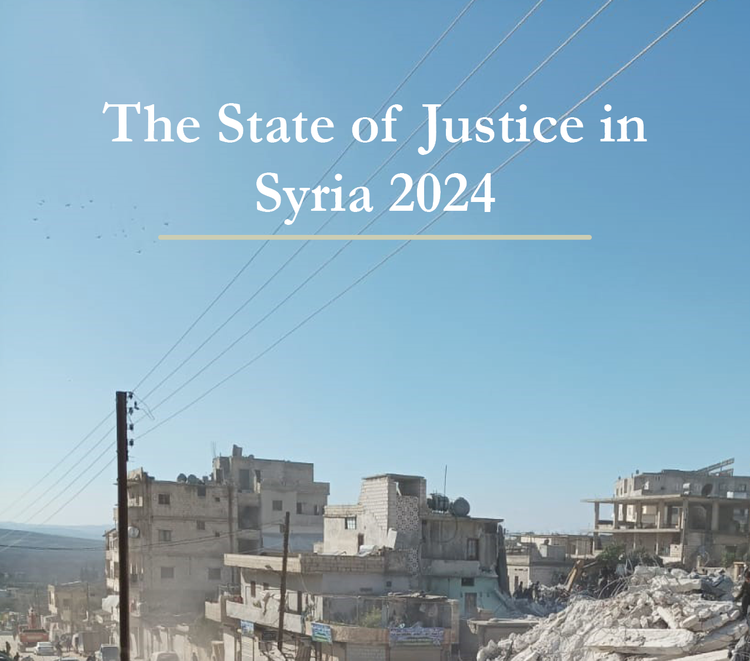
The “State of Justice in Syria, 2024” is the Syria Justice and Accountability Centre’s (SJAC’s) fifth annual report, focusing on human rights violations and justice efforts in Syria in 2023. This year, Syrians suffered a worsening economic collapse, a result of years of conflict and mismanagement by the Syrian regime aggravated by international sanctions. This situation was drastically worsened by the devastating earthquake that struck northwest Syria and southern Türkiye in February, causing massive destruction and loss of life throughout northwest Syria. As of May 2023, 15.3 million Syrians across Syria needed humanitarian assistance, and an estimated 90 percent of the Syrian population was living below the poverty line. Aid efforts were further complicated when, in July, Russia vetoed the renewal of the UN cross-border aid mechanism at Bab al-Hawa, preventing access to northwest Syria and leading to protracted negotiations between the UN and the Syrian government that delayed the delivery of vital assistance to the region. To read the report, visit the link.
|
|
|
The Syrian economy after Rami Makhlouf
|
|
|
|
|
|
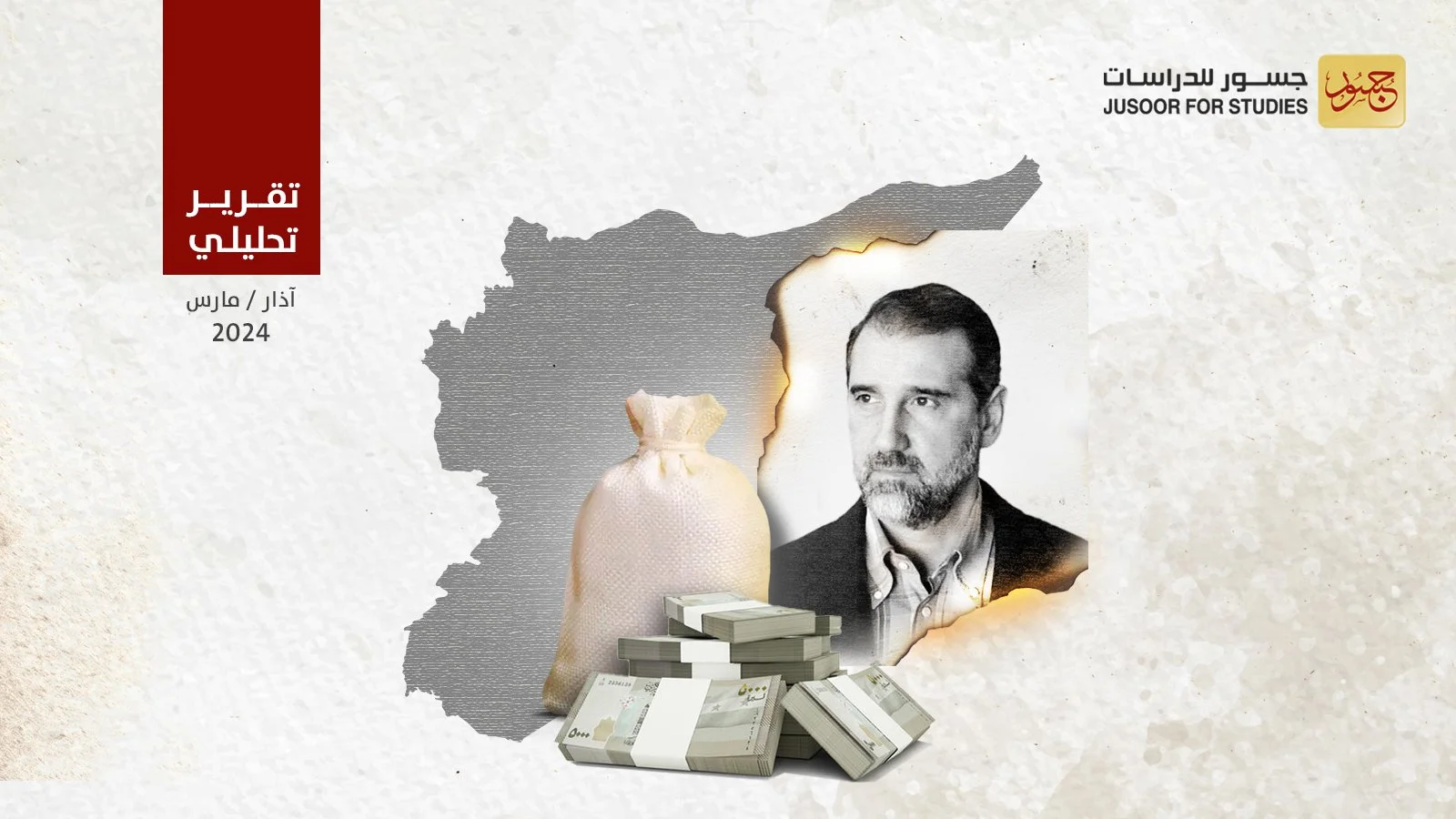
Since the onset of popular protests in mid-March 2011, demonstrators swiftly escalated their demands towards the overthrow of the regime, which they perceived as a confluence of security, political, military, and economic power structures. The Syrian regime, deeply entrenched within the country, exercises totalitarian authority across various sectors. Political power predominantly resides in the hands of the president, while the security apparatus wields considerable influence. Nearly every aspect of life and the economy is intertwined with figures associated with the regime, most notably Rami Makhlouf. Fast forward thirteen years, and Rami Makhlouf has vanished from the Syrian landscape, leaving two pressing questions: Firstly, does the cessation of Rami Makhlouf's influence signify a triumph for the Syrian revolution? Secondly, what has become of Rami Makhlouf's wealth? The Jusoor Center for Studies has released an analytical report addressing these inquiries. To read the report in Arabic, visit the link.
|
Updates about Madaniya’s Member Organisations
|
In this section, we will spotlight the achievements and developments in the work of Madaniya’s member organisations
|
|
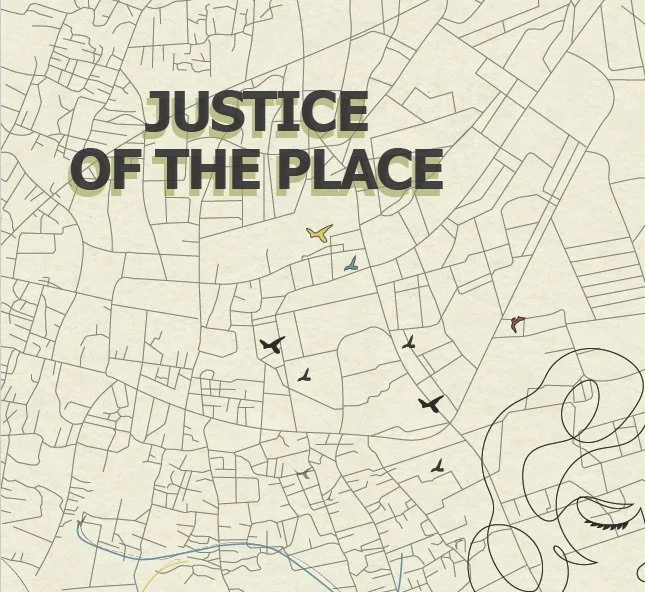
Women Now for Development has launched the first edition of a book titled "Justice of the Place," marking a pivotal moment in shedding light on the experiences of women in the Damascus countryside since 2011. This book transcends mere documentation; it serves as an in-depth exploration of the social dimensions surrounding the losses and violations endured by women and their families due to the egregious crime of forced displacement. Written by researcher Salma Karim, the book features autobiographical narratives from six women who have borne witness to profound upheavals in their lives and communities. Through these accounts, the work delves beyond the immediate effects of displacement to unveil the intricate web of crimes and violations that intersect the experiences of both women and men, resulting in manifold forms of suffering. "Justice of The Place" illuminates the political, individual, and collective dimensions of displacement as well as underscoring how its repercussions permeate every facet of the victims' lives. By erasing collective and individual memories and reshaping the history of entire regions, displacement leaves an indelible mark on the fabric of society. To read more about the book, visit the link.
|
Planting for SyriaOn March 13th, twenty-two local organizations in northwest Syria, including civil society organizations such as the Syrian Forum, SAMS, and the Syrian Civil Defense, launched the "Planting for Syria" campaign. This initiative aims to combat desertification and mitigate the environmental hazards posed by random and unfair tree felling practices. This activity coincided with several rounds of awareness-raising in various communities about the significant threat of diminishing green cover across Syrian territories, and the critical need for actions to curb this decline.
|
| | |


Comments