|
$$PLAIN_TEXT_PREVIEW$$
Madaniya’s Monthly Newsletter
|
Dear colleagues, representatives of civil society organisations, We hope this finds you in good health and spirits. On 6 June 2025, Madaniya marked two years since its founding as a collective that now brings together over 240 Syrian civil society organisations working both inside Syria and abroad. Madaniya was established during a period of political stalemate, with the aim of creating a shared civic infrastructure that enables coordination, amplifies a unified voice, and contributes to shaping policies related to Syria’s future. Over the past two years, we have worked closely with our member organisations to affirm civil society’s role as a key actor in shaping the country’s future. We organised dialogue sessions on a wide range of issues, and launched joint positions and initiatives on justice, rights, representation, and political transition. Today, as the political context shifts and the regime has fallen, Madaniya begins a new phase focused on strengthening civil society’s role in the transition process. We look forward to continuing our collective efforts to help build a new Syria that reflects the dignity and aspirations of all Syrians. Below is our June newsletter, where we share the latest updates from Madaniya and developments across the Syrian civic space. Best wishes,
Madaniya’s Team
|
Updates on Madaniya’s Work
|
Madaniya Board of Directors Elections In coordination with the Independent Elections Committee, we are moving forward with the current phase of Madaniya’s Board elections, in line with the Madaniya’s bylaws and electoral framework. These elections mark an important step towards reshaping Madaniya’s governance structure on participatory, fair, and transparent grounds—reflecting the evolving context and the new responsibilities it brings. As part of this process, the Independent Committee has officially opened nominations to fill 16 vacant seats on the Board.
|
|

|
|
|
|
Comprehensive Dialogue on the Role of Civil Society in Monitoring Syria’s Political Transition In partnership with The Day After, we advance a broad-based dialogue process aimed at reimagining the role of civil society—and Madaniya’s role in particular—in tracking and shaping Syria’s democratic transition. The process seeks to strengthen the political agency of civic actors and position civil society as a core partner in rebuilding the state and the social fabric. At the heart of this effort is the development of a Political Transition Observatory. Over the coming months, we will hold a series of participatory dialogue sessions across nine regions in Syria, covering five key themes: constitutional and judicial reform, transitional justice, economic and development policy, elections, and security sector reform. The aim is to produce a set of actionable, locally grounded indicators for each theme—built on a rights-based approach and aligned with the Constitutional Declaration and international standards. We are currently finalising the dialogue framework with The Day After, and preparing participant lists that include our member and partner organisations, along with local stakeholders and subject experts. Sessions are scheduled to begin next month and will culminate in a national civil society conference in December 2025, marking the anniversary of the fall of the regime. The conference will serve as a space to present and debate the outcomes of the process in an open and public format.
|
|
|
|
|
Madaniya's Engagement with Ongoing Events
|
World Humanitarian Forum Madaniya took part in a high-level event held at the UK Parliament in London under the title “Humanitarian Diplomacy in a Fragmented World: The Need for a Global Charter of Ethics”. The event was co-organised by the World Humanitarian Forum and the Doha Forum, and hosted by Lord Tariq Ahmad, former UK Minister for the Middle East, and H.E. Maryam bint Ali bin Nasser Al-Misnad, Qatar’s Minister of International Cooperation. It brought together ambassadors, diplomats, policymakers, and representatives of international organisations to discuss the growing challenges facing humanitarian action amid escalating geopolitical crises and declining trust in multilateral systems. The event focused on the importance of developing a shared ethical framework to strengthen accountability, rebuild trust, and safeguard the independence of humanitarian work. Madaniya’s participation reflected a broader commitment to ensuring that Syrian civil society is present in global conversations on the future of humanitarian action. It was also an opportunity to bring field-level experiences from Syria—particularly in contexts where aid intersects with political and security dynamics—into the discussion. These experiences highlight the need to move beyond rigid, centralised aid models, and toward more context-aware approaches that empower local actors and centre their knowledge in shaping responses and ensuring accountability.
|
|
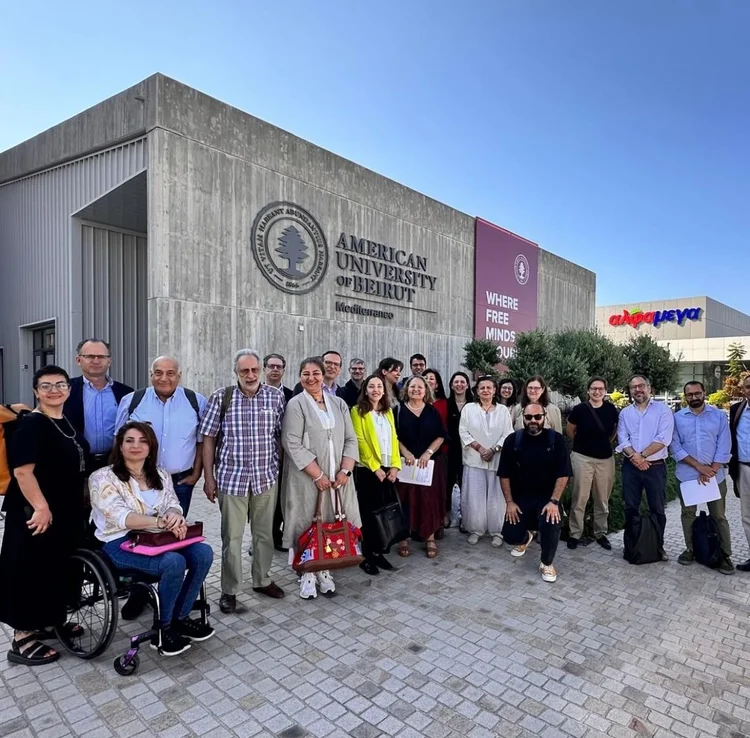
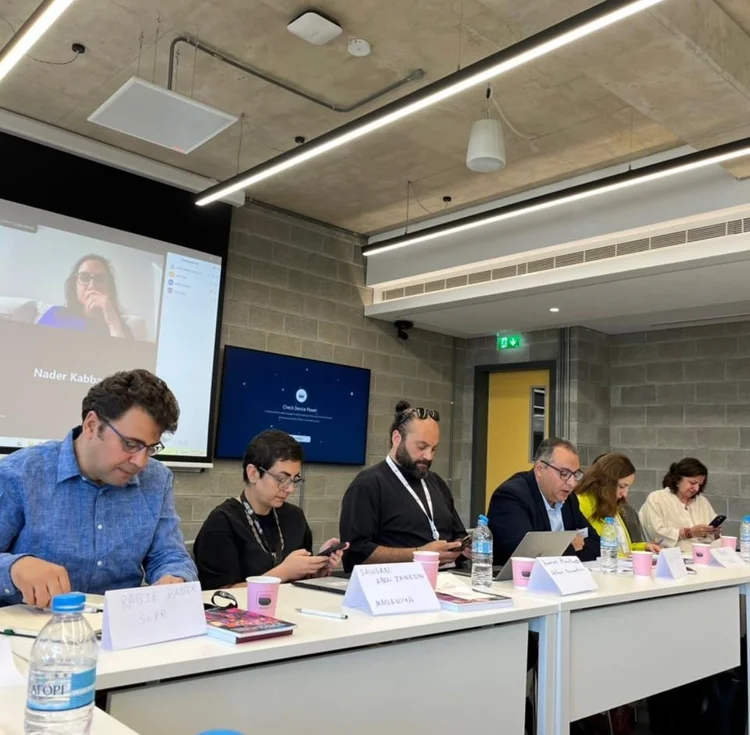
Reclaiming Civic Space in the MENA Region Madaniya participated in a regional roundtable titled “Reclaiming Civic Space: A MENA Gathering of Researchers and Donors”, held at the American University of Beirut – Mediterranean Campus in Paphos, Cyprus. The event brought together researchers, civil society actors, and representatives from donor institutions to examine the shrinking civic space in the region, assess the mounting pressures on local knowledge production and policy influence, and identify shared priorities for collaboration. Discussions explored the shifting dynamics between civil society and the state, the role of knowledge as both a tool and a site of restriction, and the influence of diasporic actors on public discourse. Participants also reflected on the impact of donor policies on the autonomy of local actors, calling for a rethinking of support models toward more balanced and sustainable frameworks.
|
|
|
The meeting offered an open space for dialogue among diverse actors and helped build a deeper, shared understanding of strategies for reclaiming civic space under complex political and economic conditions. Madaniya’s participation formed part of a broader commitment to engaging in regional conversations that connect field-based civil work in Syria with wider efforts to strengthen independent and effective civic responses.
|
|
|
|
|

|
Syrian Civil Society Conference on Women’s Rights: A Collective Discussion on Justice and Equality in Post-Conflict Syria
|
|
|
On June 24-25, Madaniya took part in the Syrian Civil Society Conference on Women’s Rights, held in Brussels. The event was organised by the EuroMed Feminist Initiative, in partnership with Dawlaty, Zoom In, and Musawat, and brought together over forty Syrian organisations, alongside legal experts, international civil society representatives, and UN bodies. The conference focused on the need to fully integrate gender equality and the rights of women and girls into all phases of Syria’s transition—from reconstruction and constitutional reform, to future legislation, transitional justice, and community peacebuilding. Discussions were informed by recommendations drawn from local dialogues held across different regions of Syria over the past two years. The aim was to produce actionable policy proposals for both national and international decision-makers, ensuring that gender justice becomes a foundational pillar of Syria’s state-building process.
|
|
|
|
|
The conference also served as a vital platform to strengthen coordination among Syrian organisations and promote unified positions on the inclusion of equal rights in Syria’s future constitution and legal frameworks emerging from the transition.
|
|
|
|
|
|
Global Strategy Meeting of the Institute for Integrated Transitions Madaniya participated in the annual global strategy meeting organised by the Institute for Integrated Transitions (IFIT), under the theme “Shifting Assumptions and Paradigms in Negotiation and Transition Processes.” The meeting brought together a wide range of experts and practitioners from IFIT’s programmes, initiatives, and technical teams across more than ten countries, alongside donor representatives and strategic partners. The meeting focused on critically reassessing dominant assumptions in the fields of political negotiation and transition, particularly in light of recent geopolitical shifts. Participants explored the impact of international aid, the erosion of multilateralism, growing polarisation, and the influence of organised crime on political stability and transition pathways. One session was dedicated to the Syrian context, positioning it as a national case study through which to test and challenge prevailing transition models. The discussion addressed the viability of these models in light of Syria’s post-regime reality, the prospects for a new social contract, and the political, security, and societal challenges shaping the post-conflict phase. The meeting offered an important space for exchanging perspectives on the future of political transition work—globally and in Syria—and highlighted the need to rethink international support tools in a way that centres local priorities and strengthens impact and sustainability.
|
|
|
|
|
|
|
Madaniya’s Engagements with International Stakeholders As part of its ongoing efforts to foster dialogue and cooperation with international actors engaged in the Syrian file, Madaniya continues to hold a series of meetings with a range of global partners. These meetings serve as a platform to discuss political and civic developments in Syria and to explore effective avenues for supporting the priorities of Syrian civil society.
|
Meeting with the EU Commissioner for the Mediterranean Madaniya took part in a meeting between the EU Commissioner for the Mediterranean and several other Syrian civil society organisations. The discussion focused on the relationship between the European Union and Syria, and the role of civil society in the transition phase. Participants addressed the forms of support needed for Syrian civic actors, the political and technical challenges facing current initiatives, and the potential for building more responsive, effective, and context-aware partnerships. The exchange reflected growing interest in ensuring that civil society plays a central role in shaping Syria’s next chapter.
|
Madaniya’s Engagements with Syrian Stakeholders As part of its efforts to expand channels of communication with local Syrian actors and strengthen national partnerships, Madaniya continues to convene meetings aimed at exploring opportunities for collaboration in civic and political engagement, particularly in areas experiencing social and administrative shifts.
|
Syrian Civil Defence Annual Meeting: Institutional Transition Towards Government Integration On 2 June, Madaniya participated in the annual meeting of the Syrian Civil Defence, dedicated to reviewing the organisation’s key achievements over the past year. During the conference, a new strategic plan was presented outlining a gradual process to dissolve the institution and integrate its functions into relevant governmental ministries.
|
Madaniya’s Engagements with International and Regional Organisations As part of its ongoing efforts to expand channels of dialogue with international and regional partners and strengthen the presence of Syrian civil society in multilateral conversations, Madaniya continues to hold regular meetings aimed at exploring areas of technical and political cooperation. These engagements focus on advancing support for civil actors during the transition, ensuring that responses remain aligned with the priorities of the local context.
|
Exploring a Digital Security Partnership with Salamatak Tech
In line with efforts to enhance the capacities of its member organisations, Madaniya met with the Salamatak Tech team to discuss the possibility of launching a tailored training partnership focused on digital security. The aim is to support Syrian civil organisations based on their specific operational needs and field conditions. Participation in the Localisation Committee of the Aid Fund for Syria
Madaniya took part in the inaugural meeting of the localisation committee within the Aid Fund for Syria. Discussions centred on the new structure of the steering council, with an emphasis on increasing the role of Syrians in shaping humanitarian policies and ensuring that civil society and local actors are meaningfully represented in directing aid programming. Meeting with the Cairo Institute for Human Rights Studies on Syrian Civil Society
Madaniya held a meeting with the Cairo Institute for Human Rights Studies as part of a research project examining the current state of Syrian civil society in the aftermath of the regime’s fall. The conversation addressed key structural and political challenges facing civil actors both inside and outside Syria, and explored opportunities for re-engaging in local civil space in the coming phase.
|
Updates from Member Organisations
|
This section highlights key achievements and recent developments in the work of Madaniya’s member organisations, alongside events that have taken place at Madaniya’s headquarters in Damascus.
|
National Dialogue in Damascus: Centering Victims’ Perspectives in Recovery and State-Building On 28 June 2025, Dawlaty organised a national dialogue in Damascus titled “Centering Victims’ Perspectives in Recovery and State-Building in Syria.” The event marked the conclusion of a series of local workshops held across various governorates, which brought together families of victims and survivors, civil society representatives, and experts in education, health, justice, and psychosocial support. The meeting aimed to present the outcomes of these previous dialogues and to share a participatory policy paper developed through those discussions. The paper emphasised the importance of incorporating victims’ rights and demands into government policy and recovery planning—particularly in key sectors such as education, health, housing, and justice. Participants also explored ways to ensure that victims’ voices are represented in decision-making spaces and how to strengthen communication channels with public institutions. The goal is to promote inclusive state-building that upholds accountability, civic peace, and formal recognition of victims as key actors in shaping Syria’s future.
|
Events at Madaniya Headquarters – Damascus
|
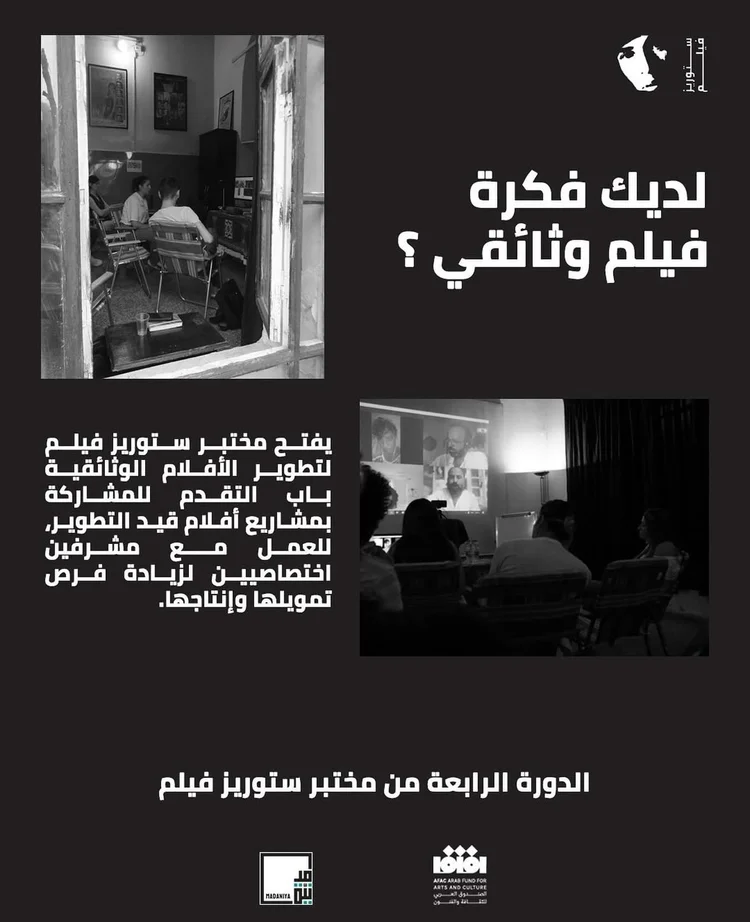
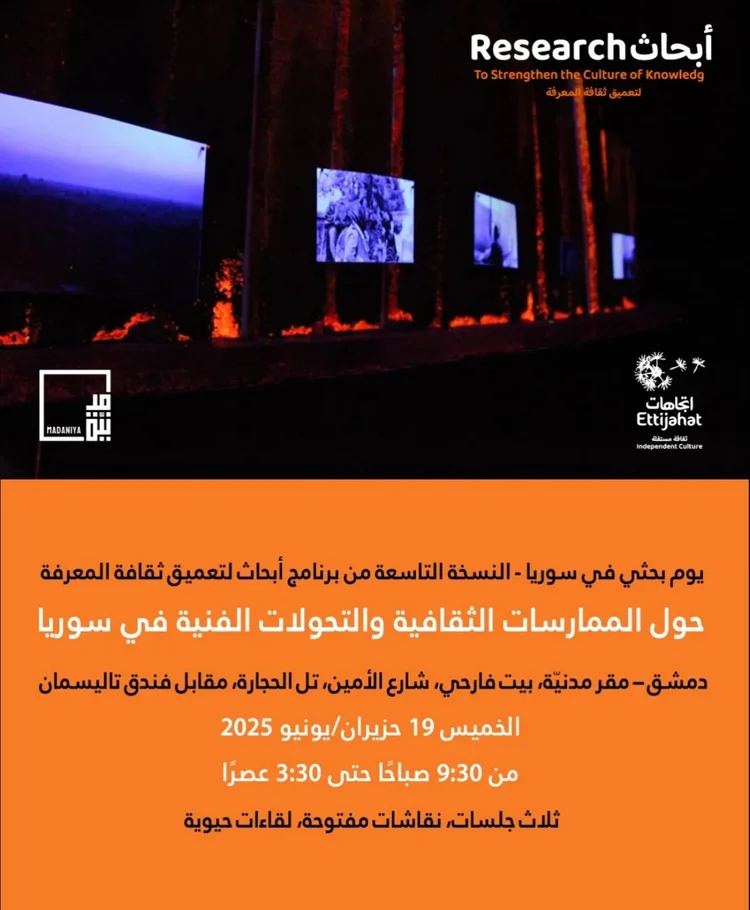
Research Day on Cultural Transformations in Syria: Art and Memory in Times of Change On 19 June 2025, Madaniya’s headquarters in Damascus hosted a research event organised by Ettijahat – Independent Culture, as part of the ninth cycle of its programme “Research: To Strengthen the Culture of Knowledge.” The event was titled “Cultural Practices and Artistic Transformations in Syria” and brought together researchers, artists, and cultural practitioners to explore the role of culture and the arts amid Syria’s ongoing political and social transformations. The discussions addressed themes such as collective memory, cultural documentation, public space, and the evolution of artistic practices since 2011. Participants examined topics like the development of libraries, cinema, and ceramics, as well as the relationship between art and identity, and the role of women in crafting alternative cultural narratives. The event concluded with an open discussion about the future of cultural work in Syria and the importance of safeguarding its cultural diversity. Stories Film Lab 2025: Supporting Emerging Voices in Syrian Cinema Madaniya’s Damascus headquarters is hosting the Stories Film Lab 2025 throughout July and August. This intensive training initiative brings together a diverse group of emerging Syrian filmmakers to strengthen their skills in documentary and short fiction filmmaking. Over the course of a month, participants engage in training sessions on creative writing, visual storytelling, and the interpretation of image and reality. The programme also includes one-on-one mentorship with experienced cinematic professionals, curated film screenings, and group discussions exploring the link between cinema, memory, and collective experience. The lab concludes with internal project showcases, paving the way for selected film ideas to move into the next phase of production and support.
|
In this section, we highlight the latest reports and updates issued by Syrian institutions or concerning Syria during the past month.
|
|
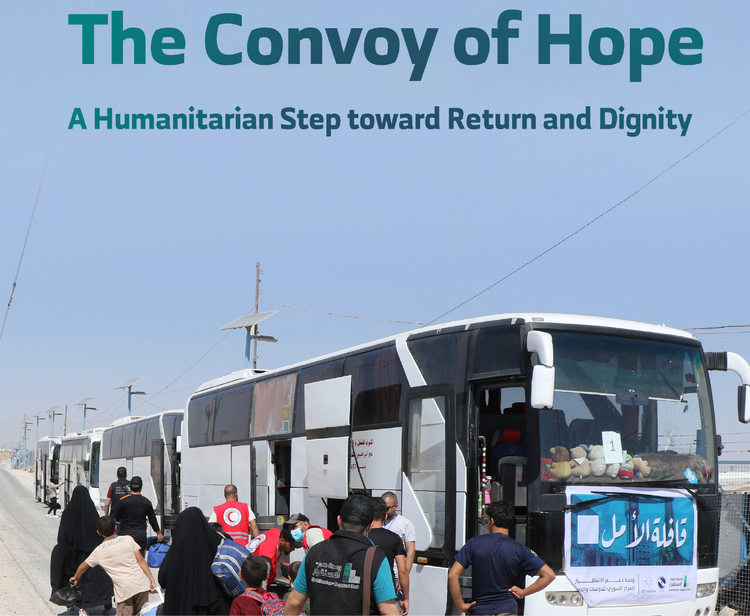
The Convoy of Hope – Stabilisation Support Unit The Stabilisation Support Unit, in partnership with the Syrian Centre for Studies and Dialogue and the UNHCR, released a report detailing the first phase of a voluntary resettlement initiative. The effort saw the relocation of 42 families — a total of 178 individuals, mostly from highly vulnerable groups — from Al-Hol camp to Aleppo Governorate. The operation was carried out with the support of the Syrian government and the Autonomous Administration, and included coordinated medical, psychosocial, and logistical assistance. Upon arrival, families were received at a dedicated site offering health screenings, psychosocial services, and official documentation, before being reunited with relatives. The report highlights this initiative as a replicable model for dignified resettlement inside Syria, while also stressing the critical need for sustained healthcare, economic, and psychosocial support. Read the full report via the provided link |
|
|
|
|
New Policy Brief: Funding and Partnerships from the Perspective of Local Women-Led Organisations in Syria CAFOD, in collaboration with Women Now for Development, Basmeh & Zeitooneh, and CARE, has released a new policy brief exploring funding and partnerships through the lens of local women-led organisations (WLOs) in Syria. The brief was developed by the Gender in Emergencies research group, guided by an advisory committee composed of Syrian WLO representatives. The paper sheds light on the often symbolic or top-down nature of partnerships between international actors and local WLOs. Despite growing global rhetoric about supporting women-led initiatives, these organisations frequently encounter processes framed as capacity assessments or due diligence exercises that do not translate into equal funding or leadership roles. WLOs continue to be treated as junior partners rather than full counterparts. The brief also highlights the crucial role WLOs played in local crisis response after the Syria–Turkey earthquake. It calls for dedicated funding mechanisms and equitable partnership models — both between international organisations and WLOs, and among WLOs of different sizes — to support locally grounded leadership. Finally, the brief recommends that donors adopt minimum principles for local funding and endorse a partnership charter to ensure visible, actionable commitments to support WLO leadership. Without such shifts in practice, localisation efforts will remain performative and fail to deliver real accountability or empowerment. Read the full brief in English via the provided link
|
| | |

Comments