|
$$PLAIN_TEXT_PREVIEW$$
Madaniya’s Monthly Newsletter
|
Dear colleagues, representatives of civil society organisations, We hope this finds you in good health and spirits. July witnessed a painful escalation in violence and sectarian tensions, further compounding the challenges our people face and threatening Syria’s social fabric and future. We honour the memory of the victims with heavy hearts and a renewed determination to continue the struggle for dignity for all Syrians. In this spirit, we reaffirm our commitment to the values of justice, citizenship, and democracy, and we remain steadfast in our joint efforts to build the Syria we dream of—and the one future generations truly deserve. Below is our July newsletter, where we share the latest updates from Madaniya and developments across the Syrian civic space. Best wishes,
Madaniya’s Team
|
Updates on Madaniya’s Work
|
Madaniya Board of Directors Elections This month we concluded the nomination phase for Madaniya’s Board of Directors elections, which witnessed wide engagement from member organisations across all six geographic constituencies. This milestone marks an essential step in restructuring Madaniya’s governance on participatory and representative foundations that reflect current political shifts in Syria and strengthen civil society’s role as a key actor in the transition process. Based on the announcement issued by the Independent Elections Committee, the nomination process opened for 16 vacant seats on the Board. The committee received 50 nominations, including 16 female candidates. Out of 149 eligible voting organisations, 113 cast their votes while 8 organisations abstained, bringing the voter turnout to 76%. To ensure maximum participation and access, the electronic voting period—which began on Saturday, 26 July—was extended until the evening of Monday, 28 July 2025. The Independent Committee opened the appeals process on Wednesday, 30 July at 12:00 p.m. Syria time for a period of 72 hours, in accordance with the electoral regulations. Following the conclusion of this phase—with no formal appeals submitted and only a few inquiries currently being addressed—the Independent Committee is now preparing the final election report. In the meantime, we are pleased to share the names of the newly elected members: From Central and Coastal Syria (Hama, Homs, Latakia, Tartous): Iyad Al-Khatib and Maria Fatima Abbas. From Northern Syria (Aleppo, Idlib): Anas Al-Rawi, Muznah Al-Jundi, Nada Aswad, and Farouq Habib. From Southern Syria (Damascus, Rural Damascus, Suwayda, Daraa, Quneitra): Osama Sharbaji, Thuraya Hijazi, Samah Adwan, Hanan Halimeh, and Kholoud Helmi. From Al-Jazira and Eastern Syria (Deir Ezzor, Raqqa, Hasakah): Jalal Al-Hamad and Lina Najari. From Neighbouring Countries and the Diaspora: Hanadi Alloush, Al-Mu’tasim Al-Sayoufi, and Ahmad Sheikh Sayyedi. We extend our sincere gratitude to all member organisations who contributed to the success of this process and reaffirm our commitment to a democratic and participatory path that strengthens the role of Syrian civil society in building the country’s future. We also warmly welcome the newly elected Board members and look forward to working closely with them in the coming phase in service of Madaniya’s mission and goals. |
|

|
|
|
|
Comprehensive Dialogue on the Role of Civil Society in Monitoring Syria’s Political Transition In partnership with The Day After (TDA), Madaniya continues to advance the development of a national dialogue track aimed at strengthening the role of Syrian civil society in monitoring key indicators of democratic transformation during the country’s transitional phase. This initiative responds to the pressing need for locally grounded tools capable of meaningfully assessing progress in justice, reform, and political participation, while affirming civilian governance as a foundational pillar in rebuilding the Syrian state. At the heart of this effort is the creation of the Political Transition Observatory, which will be shaped through a series of consultative dialogue sessions held across various regions inside Syria. These sessions will focus on five essential themes: constitutional and judicial reform, transitional justice, economic and development policies, elections, and security sector reform. Work is currently underway to finalise the conceptual framework of the initiative, coordinate the lists of participating member and partner organisations, and engage a range of local actors and domain experts. The dialogue sessions are set to begin in the coming period, with the track culminating in a national civil conference in December 2025, marking the anniversary of the regime’s fall. The conference will present the outcomes and findings of this collective process to the public and relevant stakeholders. Further details on the timeline and upcoming activities will be shared soon.
|
|
|
|
|
Madaniya's Engagement with Ongoing Events
|
|
|
Madaniya’s Position on the Escalation in As-Suwayda, Military Developments, and Israeli Strikes on Syria Throughout July 2025, Madaniya issued a series of public statements outlining its principled position on the alarming developments in As-Suwayda, including the grave violations committed during the escalation, the mounting communal tensions threatening civil peace, and the repeated Israeli attacks on Syrian territory. The statements reaffirmed Madaniya’s unwavering commitment to the protection of civilians as a non-negotiable priority, and its rejection of all forms of violence—whether from local conflict actors or external interventions. In its first statement, Madaniya strongly condemned the military escalation in As-Suwayda, warning of the deepening humanitarian crisis resulting from the collapse of basic services, insecurity, communication blackouts, and the obstruction of emergency response and aid delivery. Madaniya called on the Syrian authorities to fulfil their responsibilities in protecting civilians, ensuring the continuity of essential services, halting military operations, and opening safe corridors to facilitate evacuation and humanitarian access. A subsequent statement stressed that the escalation threatens not only the immediate region but risks fuelling broader sectarian violence. Madaniya called for a genuine national dialogue and concrete steps to demilitarise irregular armed groups, urging all armed actors to undergo training in international humanitarian law. It also reiterated the need for transitional authorities to uphold their obligations to ensure inclusive justice, accountability, and an end to impunity. |
|
|
Regarding Israeli strikes targeting government and military sites, Madaniya unequivocally condemned these attacks as a blatant violation of national sovereignty and a dangerous provocation that exacerbates internal divisions and undermines Syria’s territorial integrity. It firmly rejected calls for Israeli intervention under the guise of protecting the Druze community, warning that such rhetoric reinforces narratives of external guardianship and exploits the chaos for regional power plays at the expense of Syrian lives. Madaniya reminded the international community of its legal and moral obligations to act urgently in response to these violations, protect civilians, and support an inclusive national process rooted in equal representation, the rule of law, and social cohesion. Reaffirming its conviction that there can be no security or stability without justice and accountability, and no democratic transition without genuine partnership and the dismantling of repressive structures, Madaniya stressed the importance of rebuilding trust among Syrians on the basis of rights and dignity. Madaniya continues to coordinate with its member organisations in As-Suwayda and across southern Syria to explore viable mechanisms for response across humanitarian, legal, and political dimensions. To read the full statements, visit the provided link. |
|

|
|
|
Closed-Door Discussion on the Syrian Coast Fact-Finding Committee Report On Thursday, 31 July 2025, Madaniya convened a closed-door virtual meeting with Mr. Yasser Farhan, legal advisor at Mezan Organisation for Human Rights—a member organisation of Madaniya—and former member and spokesperson of the Fact-Finding Committee on the Events in the Syrian Coast. The meeting brought together a limited group of participants, including representatives of Syrian human rights organisations, families of victims and survivors from the region, local initiatives documenting violations, a member of the Advisory Team of the National Commission for the Missing, as well as representatives of organisations active in monitoring abuses in As-Suwayda governorate. The discussion aimed to facilitate an open and objective exchange around the findings of the Committee’s report, offering substantive feedback on both its content and methodology. The meeting sought to enhance transparency and accountability, while fostering greater alignment between civil society documentation efforts and national justice mechanisms. It also underscored the importance of linking grassroots initiatives with broader processes to combat impunity and uphold the rights of victims.
|
Syrian-Syrian Dialogue: Consultative Meeting in Geneva Madaniya took part in a consultative meeting held on 24–25 July 2025 in Geneva, organised by Justice for Life, with the participation of Syrian experts, representatives of civil society organisations from Northeast and Northwest Syria, and members of the Syrian Transitional Government. The meeting aimed to discuss technical recommendations that could support a consensus-based negotiating track between various Syrian actors, including the Syrian government and the Syrian Democratic Forces/Autonomous Administration, on governance and civil administration during the transitional phase. Madaniya’s participation comes within the framework of its commitment to supporting Syrian-Syrian dialogue initiatives, fostering opportunities for national consensus, and advancing inclusive and sustainable governance grounded in justice, the rule of law, and human rights. Participants exchanged key recommendations, most notably the affirmation of Syria’s territorial unity within a comprehensive political framework, the need for sustained negotiations between parties, rejection of military escalation, endorsement of administrative decentralisation, development of the justice sector, and the pursuit of independent and realistic solutions to issues facing internally displaced persons and refugees, alongside the adoption of sustainable development policies. The meeting also underscored the importance of rebuilding educational institutions, recognising cultural and linguistic diversity, and rehabilitating Syria’s legal and administrative infrastructure. At the conclusion of the discussions, the recommendations were presented to several diplomats from countries engaged in the Syrian file. To read the full press release, visit the available link.
|
Urgent Recommendations to Prevent Further Atrocities in Syria In response to the dangerous escalation that swept through As-Suwayda in mid-July 2025—including extrajudicial killings, grave violations against civilians, Israeli airstrikes, and large-scale displacement—Madaniya, in partnership with Crisis Action and several Syrian civil society organisations including the Syrian Legal Development Programme (SLDP), the Civil Peace Group, Huquqiyat, MedGlobal, the Syrian Center for Media and Freedom of Expression, the Syria Campaign, Women Now for Development, Lilon Victims Association, and Dawlaty, developed two recommendation papers addressed to both the Syrian Interim Government and the international community. These papers aim to ensure the protection of civilians, prevent the recurrence of atrocities, and strengthen rapid response mechanisms to unfolding crises. The first paper, addressed to the Syrian Transitional Government, outlines a series of urgent measures, including deploying civilian protection teams to high-risk areas, ensuring the continuity of essential services such as electricity, water, communications, and healthcare, and taking swift action to monitor early warning signs in other regions and respond preventively. The paper also emphasises the need to launch transparent investigations into all violations and hold perpetrators accountable regardless of affiliation—bolstering public trust in transitional justice and reinforcing the principle of non-impunity. It calls for addressing rising social fragmentation through a nationwide dialogue to counter hate speech and sectarian incitement, laying the groundwork for a reconciliation process based on recognition, dignity, and inclusion. Furthermore, it recommends the creation of a specialised crisis response mechanism within the transitional government, in coordination with civil society actors. The second paper, addressed to the international community, calls for urgent and effective action by international stakeholders, particularly the UN Security Council, the Human Rights Council, and donors. Key recommendations include urging Syrian authorities to ensure the safety and protection of all civilians in the southern region—especially As-Suwayda—rapidly restore essential services, guarantee unimpeded humanitarian access, and support medical evacuations for the wounded and ill amid the collapse of local healthcare systems. The paper also calls on the international community to ensure the protection of Syrian refugees, halt all forms of forced return, condemn Israeli attacks that violate Syrian sovereignty and international law, and urge Israel to fully comply with the 1974 Disengagement Agreement. Finally, the document stresses the importance of supporting an inclusive national track that advances participatory governance and recognises the central role of civil society in addressing political and humanitarian challenges, including combating hate speech, ending sectarian incitement, and promoting human rights and accountability. To read the full recommendations for the International Community, visit the available link.
|
Madaniya’s Engagements with International Stakeholders As part of its ongoing efforts to foster dialogue and cooperation with international actors engaged in the Syrian file, Madaniya continues to hold a series of meetings with a range of global partners. These meetings serve as a platform to discuss political and civic developments in Syria and to explore effective avenues for supporting the priorities of Syrian civil society.
|
|
|
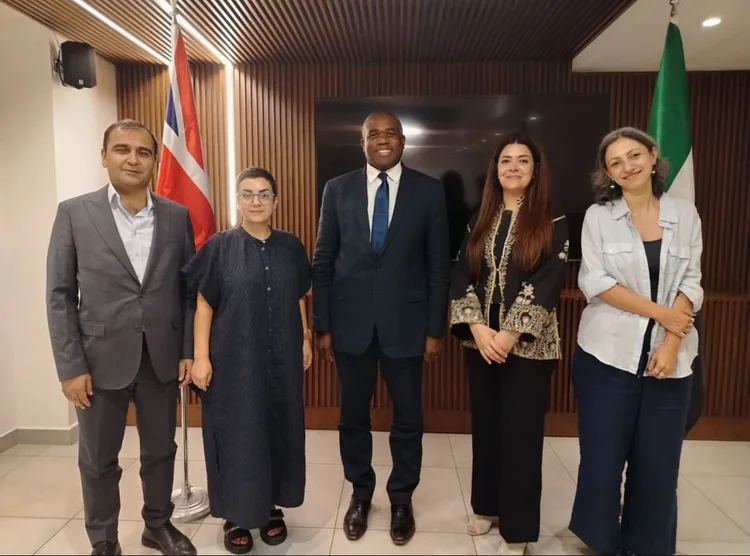
Meeting with UK Foreign Secretary David Lammy On 6 July 2025, Madaniya’s Chief Executive Officer participated in a closed meeting held in Damascus with UK Foreign Secretary Mr. David Lammy, Director for the Middle East and North Africa at the UK Foreign Office Mr. Stephen Hickey, and a number of Syrian civil society actors. The discussion centred on the critical role of civil society in shaping Syria’s future during the current transitional period following the fall of the regime, and the need to articulate an inclusive Syrian vision rooted in justice, citizenship, and civil leadership. In her intervention, Madaniya’s stressed that overcoming the legacy of violent conflict—and the former regime’s policies of identity politicisation and sectarian division—requires building a state based on equal citizenship, the rule of law, accountable national institutions, and a transitional justice framework that guides the recovery and reconstruction phase. Madaniya also emphasised the importance of empowering civil society to play its full role during this pivotal moment, and called for international partnerships based on respect for Syrian agency and locally driven visions led by independent civic institutions. |
|
|
Meeting with EU Head of Delegation Michael Ohnmacht As part of Madaniya’s ongoing efforts to strengthen Syrian civil society engagement in international policy dialogue, Madaniya met with Mr. Michael Ohnmacht, Head of the European Union Delegation to Syria, and his team to discuss preparations for the upcoming Civil Society Event scheduled to take place in Damascus later this year. The meeting addressed key elements of the event’s structure, including proposed sessions, formats, and the importance of ensuring inclusive and representative participation that reflects the diversity of Syrian civic actors and the priorities of the transitional phase. Madaniya highlighted the need for civil society to be a genuine partner in shaping and delivering the event, reinforcing its independence, vision, and central role in building a just and inclusive political path forward. |
|

|
|
|
Madaniya’s Engagements with Syrian Stakeholders As part of its efforts to expand channels of communication with local Syrian actors and strengthen national partnerships, Madaniya continues to convene meetings aimed at exploring opportunities for collaboration in civic and political engagement, particularly in areas experiencing social and administrative shifts.
|
|
|
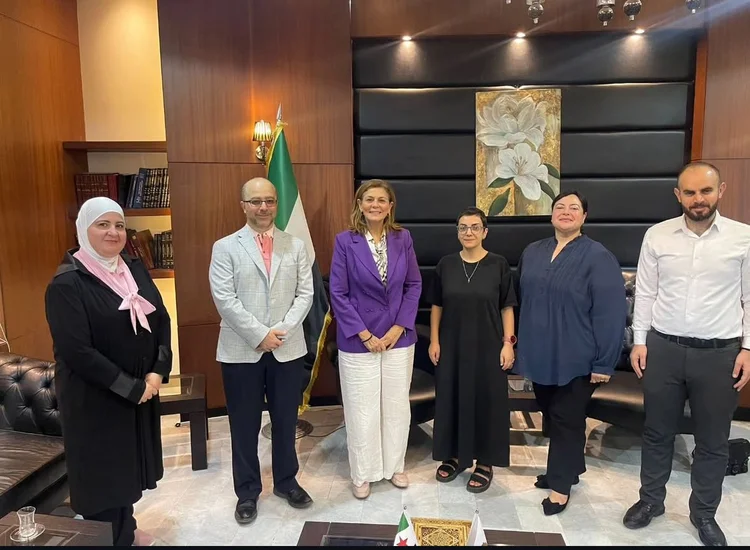
Meeting with the Minister of Social Affairs and Labour, Hind Kabawat On 10 July 2025, Madaniya’s Chief Executive Officer Sawsan Abou Zainedin, along with Board Members Tarek Abou Ghazaleh and Suzanne Meriden, met with Minister of Social Affairs and Labour, Ms. Hind Kabawat, and her advisory team, including Nivin Houtari and Oday Al-Hussein. The meeting focused on presenting a position paper prepared by Madaniya in consultation with its member organisations, with the aim of discussing its contents with the Minister and requesting that it be submitted to the Presidency. Madaniya clarified during the meeting that the paper does not necessarily reflect the views or positions of all member organisations, but rather seeks to convey the ongoing dialogue around key developments in the political transition process. This includes the national dialogue, the constitutional declaration, the transitional government, intra-Syrian agreements, violations of sovereignty and the risks of foreign interference, as well as issues of justice, civil peace, sanctions, the restructuring of the public security forces and military, the creation of a General Secretariat for Political Affairs, and the role of civil society in the next phase. Minister Kabawat affirmed the government’s commitment to preserving the national dialogue as a continuous process, particularly in addressing divisions and building civil peace. She noted that this is being advanced through a series of conferences, dialogues, and workshops held across different governorates. The Minister also indicated that work is still underway on the final report of the National Dialogue Conference, which is expected to be released soon. She emphasised that the Ministry remains open to all initiatives that seek to provide proposals and solutions aimed at strengthening the civic space, supporting the political transition, and addressing current challenges in ways that reinforce civil peace and tackle existing divisions. |
|
|
|
Updates from Member Organisations
|
This section highlights key achievements and recent developments in the work of Madaniya’s member organisations
|
|
|
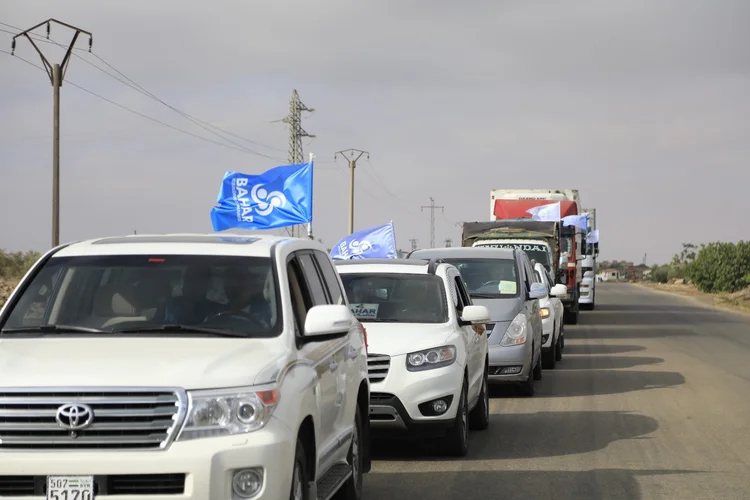
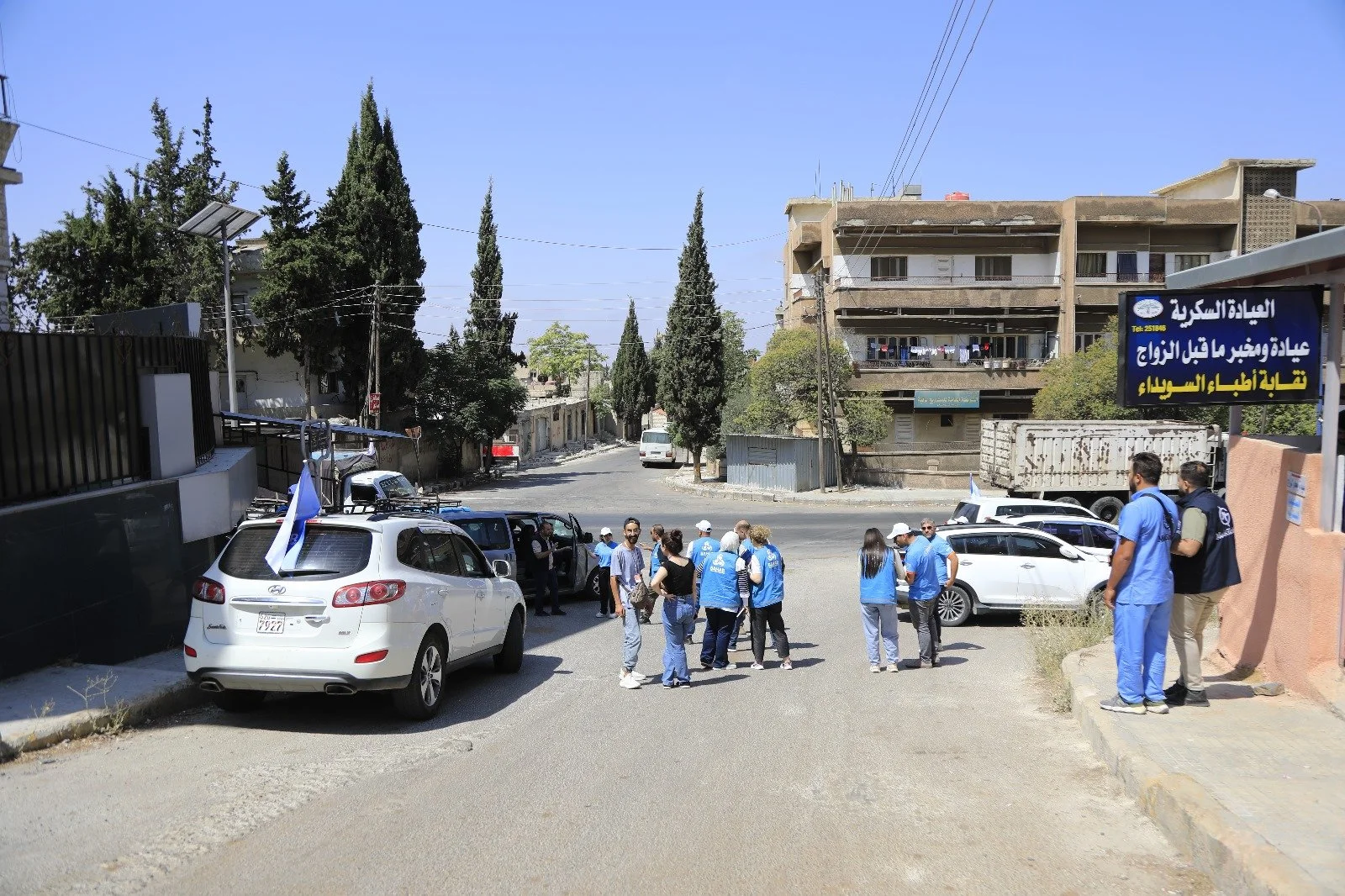
Humanitarian and Medical Aid Convoy to As-Suwayda by Bahar and MedGlobal In response to the rapidly deteriorating humanitarian and medical conditions in As-Suwayda, Bahar Organisation and MedGlobal carried out a field visit to the governorate as part of an emergency response plan targeting southern Syria. The visit included the delivery of 28 medical kits to the local branch of the Medical Syndicate, intended to serve approximately 10,000 beneficiaries, including children, women, and patients with chronic illnesses. Medication was also distributed to key health facilities, including the National Hospital of As-Suwayda, Shahba Hospital, Salkhad Hospital, and the diabetes clinic of the Medical Syndicate. To address the severe water crisis affecting the area, the organisations delivered two trucks carrying approximately 45 tons of potable water, which were distributed to shelters and impacted communities. These efforts aimed to alleviate daily suffering and bolster the resilience of residents in one of Syria’s most vulnerable regions. |
|
|
The visit concluded with a series of meetings with the Medical Syndicate in As-Suwayda and Shahba, attended by displaced individuals and survivors. A broader coordination meeting was also held with the directors of water, municipalities, electricity, and health, alongside representatives from UN agencies. Discussions focused on assessing the response and identifying key humanitarian and service-related priorities for the period ahead. This intervention stands as a clear example of the critical role Syrian civil society organisations play in humanitarian response. It highlights the urgent need for strengthened coordination and complementarity between local actors to ensure effective delivery, close service gaps, and align resources with the real priorities of affected communities. |
|
|
|
|
Joint Statement on the As-Suwayda Events Issued by 57 Syrian Civil Society Organisations A total of 57 Syrian civil society organisations—including Justice for Life, the Assyrian Aid Society, Synergy Victims Association, Badael, URNAMO for Justice and Human Rights, and Syrians for Truth and Justice, among others—signed a joint statement expressing deep concern over the escalation of violence in the governorate of As-Suwayda in southern Syria and the accompanying widespread and grave human rights violations. The statement cited credible reports of extrajudicial killings, torture, looting of property, and sectarian-motivated assaults, amid an evident failure to protect civilians and hold perpetrators accountable. The statement stressed that the violence in As-Suwayda is not an isolated incident but part of a worrying pattern of recurring violations, as previously seen in Syria’s coastal region and the Damascus countryside—threatening to deepen social fractures and inflame communal divisions. The signatories also condemned the recent Israeli attacks and warned of the destabilising effects of foreign interventions on Syria’s security and sovereignty. The statement called on the Syrian Transitional Government to assume its legal and moral responsibilities by initiating impartial and transparent investigations into the violations in As-Suwayda, prosecuting those responsible, immediately halting military operations, and engaging in genuine dialogue with all Syrian constituencies. It further urged the government to permit the entry of international investigative bodies and conduct a comprehensive review of the transitional justice process to ensure the inclusion of victims of all violations, both pre- and post-regime collapse. The statement also addressed the international community—particularly the European Union and the United States—calling on them to support efforts to end violence in Syria and promote an inclusive and equitable political transition. It urged the UN Security Council to convene an emergency session to address developments in As-Suwayda, pressure Israel to cease its violations, and reaffirm the international community’s commitment to protecting all segments of the Syrian people and advancing justice and accountability.
|
Second Hope Convoy: From Al-Hol Camp to Home—A New Chapter Begins The Stabilisation Support Unit (SSU) shared a detailed report on the second phase of the “Hope Convoy” initiative, implemented in partnership with the Syrian Centre for Dialogue and Studies. The initiative took place under a tripartite agreement between the UNHCR, the Syrian Transitional Government, and the Syrian Democratic Forces (SDF), aiming to relocate several families from Al-Hol Camp to safer areas in the Aleppo and Idlib governorates. The report documents the journey carried out on 5 June 2025, during which 36 families—mostly women, children, and elderly individuals—were transported out of the camp. It outlines the safety measures taken, including the deployment of four dedicated passenger buses, five accompanying ambulances, and nineteen trucks for transporting luggage and humanitarian supplies. The convoy was also supported by a team of medical professionals, psychologists, and social workers to ensure continuous healthcare and psychosocial support throughout the trip. A comprehensive response plan was put in place for the post-relocation phase. This includes initial reception and temporary shelter provision, legal support and civil documentation (such as birth certificates and ID cards), referrals to psychosocial and medical care services, and assistance with safe community reintegration in host areas. The report also highlights the challenges encountered during the operation, including bureaucratic delays, lack of civil documentation, and the psychological distress faced by some families. It stresses the need for a national coordination mechanism to oversee voluntary return cases and safeguard the dignity and rights of returnees. As outlined in the report, the Hope Convoy stands as a tangible example of how displaced individuals can be relocated and reintegrated into safer, more humane settings. It presents a clear vision for voluntary, safe return rooted in human rights and social justice—contributing to the broader goal of rebuilding Syria’s social fabric on inclusive and sustainable foundations. To read the full report, visit the link provided.
|
In this section, we highlight the latest reports and updates issued by Syrian institutions or concerning Syria during the past month.
|
Report: After the Regime... Before the State – Violations in March 2025 in Syria’s Coast and Hama The Syrian Center for Media and Freedom of Expression has released a field report titled “After the Regime... Before the State: Violations in March 2025 in Syria’s Coast and Hama.” The report documents a series of grave human rights violations that took place in the governorates of Latakia, Tartous, and Hama during March 2025, describing them as systematic and alarmingly sectarian in nature. The wave of violence began with attacks by armed groups affiliated with the transitional authorities on security and military sites. These escalated rapidly into extrajudicial killings, arbitrary detentions, torture, the burning and looting of public and private property, and the forced displacement of civilians. The report notes that these acts appeared to be retaliatory, emerging from long-standing social tensions, and ultimately deepened sectarian divides within the affected communities. According to the Syrian Fact-Finding Committee, at least 1,426 people—both civilians and members of the security forces—were killed during these events. The committee found no evidence of direct orders from transitional leadership to carry out such violations but documented a pattern of “widespread and spontaneous” acts of violence. It also named hundreds of alleged perpetrators, some of whom were reportedly detained, though in the absence of a transparent accountability mechanism. This wave of violence was deemed one of the most severe since the fall of the regime, raising fears of recurrence in other parts of the country, particularly in Suwayda, where similar patterns have begun to emerge. The report underscores the urgent need for transparency and immediate steps to ensure justice and hold perpetrators accountable—essential measures to safeguard civil peace and support a fair and inclusive political transition. To read the full report, visit the link provided.
|
| | |

Comments