|
$$PLAIN_TEXT_PREVIEW$$
Madaniya’s Monthly Newsletter
|
Dear colleagues and representatives of Syrian civil society organisations, we hope that you are well! Below is our newsletter for the month of February, where we share with you the latest developments in Madaniya and the Syrian civic space. Best wishes,
Madaniya’s Team
|
Updates on Madaniya’s Work
|
Madaniya’s Board Elections The Elections Committee continues its work to introduce the necessary amendments to Madaniya’s bylaws and electoral system. As we previously shared, the profound changes in the Syrian reality following the fall of the Assad regime have had a significant impact on the redistribution of districts and seat allocations. In light of this, the Elections Committee, in coordination with its chair and members, has recommended a thorough review of the electoral system. Additionally, the committee has proposed amendments to both the bylaws and the electoral system to align with these transformations. It has also recommended postponing the electoral process to allow for the reorganisation of candidate lists and the establishment of clear timelines and procedures, ensuring broad and effective participation. |
|

|
|
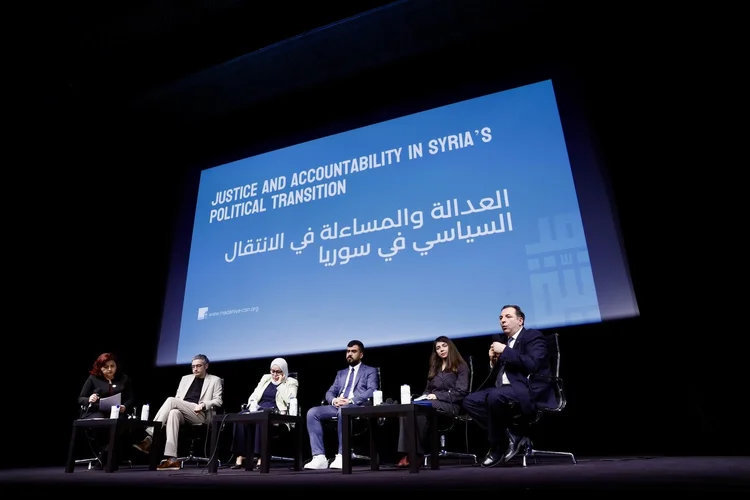
Justice and Accountability in Syria’s Political TransitionTwo months after the fall of the Assad regime and the beginning of Syria’s political transition, justice and accountability remain central issues in Syrians' pursuit of a future based on dignity, the rule of law, and respect for human rights. In this context, on 12 February 2025, Madaniya organised an event at the Arab World Institute, building on the outcomes of the Justice Conference held by civil society organisations in Damascus on 24–25 January 2025.
|
|
|
|
|
During this event, discussions assessed the efforts of civil society over the past thirteen years in the fields of justice and accountability, highlighting challenges arising from the escape of many perpetrators beyond Syria’s borders. The conversation also explored the potential role of the international community in prosecuting these crimes, as well as questions regarding the formation of victims' groups, the role of women within them, and the importance of local initiatives in achieving justice. Additionally, the discussion addressed the work undertaken by Syrian institutions to preserve documents, evidence, and mass graves, alongside efforts to enhance cooperation between international mechanisms and local and national expertise in the pursuit of accountability. Regarding social cohesion and the prevention of individual acts of retaliation, the focus was placed on local initiatives aimed at easing sectarian and ethnic tensions in various regions of Syria, with an emphasis on avoiding policies that could deepen divisions within society. Practical steps were also reviewed to balance the lifting of sanctions with improving living conditions, while ensuring that perpetrators of economic crimes do not evade justice and preventing the financing of entities involved in human rights violations. The discussion further examined the positive role that supporting states can play while ensuring they stay on course. It also highlighted key recommendations to be shared with international policymakers on justice and accountability in Syria. To watch the full event, visit the following link To watch the key discussions from the session, follow this link
|
|
|
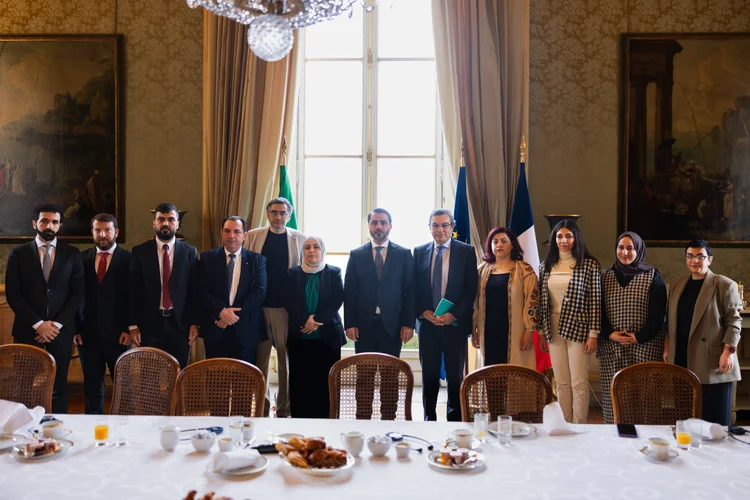
Meeting with the Syrian and French Foreign Ministers in Paris: Demands for Justice, Accountability, and the Building of a New SyriaOn 13 February 2025, a delegation of Syrian civil society organisations and victims associations met with Syrian Foreign Minister Asaad Al-Shibani and French Foreign Minister Jean-Noël Barrot in Paris, on the sidelines of the ministerial meeting on Syria. This meeting followed an event organised by Madaniya the previous day, which was based on the Syrian-Syrian Dialogue Conference held in Damascus in January 2025.
|
|
|
|
|
The delegation put forward several recommendations focusing on key aspects necessary to ensure transitional justice and Syria’s future. Participants stressed that victims and survivors must have a leading role in all stages of transitional justice—from planning to implementation and oversight—to ensure that these processes address their needs and provide genuine reparations. They also underscored the importance of holding all those responsible for crimes against the Syrian people accountable, particularly Bashar Al-Assad, while urging the international community to take effective measures to pursue fugitive criminals and recover stolen funds smuggled out of Syria. The delegation’s recommendations also highlighted the need to establish a comprehensive narrative of all violations committed before and after the revolution, preserving Syria’s national memory. This narrative must include all crimes and human rights abuses suffered by Syrians across different regions, with a particular focus on gender-based violence. A sensitive approach to transitional justice is essential to ensure that women have access to justice without fear or stigma. Regarding economic and social solutions, the recommendations called for lifting economic sanctions that hinder recovery while supporting reconstruction efforts based on human rights and social justice principles. Participants also emphasised the need to support Syrian civil society, ensure its independence, and facilitate a safe working environment within Syria. Additionally, the discussions reaffirmed the urgent need to end hostilities, protect civilians, and pursue a political solution that guarantees the safe and dignified return of Syrian refugees, with well-planned measures to ensure their voluntary and secure reintegration. To read the full meeting report, visit the available link.
|
|
|
|
Syria Strategy Project workshops with Civil Society OrganisationsThroughout February, as part of the ongoing technical consultations with Syrian civil society organisations within the Syria Strategy Project—Madaniya is working on in partnership with the Atlantic Council, the Middle East Institute, and the European Institute of Peace—Madaniya hosted a series of workshops at its headquarters in Damascus. Additional consultations were also held in Latakia, Sweida, Hama, and Aleppo. These meetings built on previous discussions regarding the strategy and recommendations put forward by Syrians. They also provided an opportunity to engage with a broader range of local actors, including those in areas that had previously been more difficult to access. During the workshops, participants addressed key issues on Syria’s agenda, including justice, transitional justice, accountability, security, and economic conditions, as well as Syria’s future, and the challenges the country faces in this critical phase. As part of efforts to expand participation, the project also organised online workshops on 27 February 2025, focusing on gender and the importance of women’s representation in Syria’s political transition. Another online session was held with organisations from north and northeastern Syria to discuss the political transition process and how to ensure meaningful participation of all Syrian communities in this process.
|
|
|
|
|
|
Madaniya's Interactions with Ongoing Events
|
|
National Dialogue ConferenceMadaniya, represented by its Chief Executive Office, members of its Board of Directors, and member organisations, participated in the National Dialogue Conference held on 25 February at the People’s Palace in Damascus, following an introductory meeting organised the previous day. After opening speeches by the President, the Minister of Foreign Affairs, and the Chair of the Preparatory Committee for the National Dialogue Conference, participants were divided into sixteen working groups, each comprising approximately fifty members. These groups engaged in discussions on six key topics: constitutional framework, institution-building, civil society, transitional justice, economic principles, and personal freedoms and political life. Each working group conducted discussions over two rounds, lasting between four and six hours in total. During these sessions, the facilitation team presented two papers summarising recommendations from prior consultative meetings, guiding discussions to allow for fundamental revisions. At the end of the two discussion rounds, facilitators from each thematic group consolidated the recommendations into a final document, which was then shared with participants for approval and feedback. The conference concluded with a statement reflecting the areas of consensus reached in the working groups, while contentious points were set aside for further deliberation. A detailed report outlining these unresolved issues is expected to be prepared by the Preparatory Committee and made publicly available in the coming days. |
|
|
|
|
Dialogue on Syria: Middle East Council for Global Affairs Workshop Madaniya participated in a dialogue workshop on Syria, held in Istanbul on 31 January and 1 February 2025, organised by the Middle East Council for Global Affairs. The event brought together regional and international experts, policymakers, Syrian analysts, and civil society representatives. Discussions focused on the aftermath of the Assad regime’s collapse on 8 December 2024, the opportunities and challenges facing Syria in the post-Assad era, and the political, economic, and geopolitical implications for the region. The discussions emphasised the urgent need for the unconditional lifting of sanctions as a fundamental step toward rebuilding the Syrian state. Given the absence of a clear international initiative to support economic recovery, participants proposed holding a Syrian-led economic conference to attract investment and international aid. The workshop also addressed the necessity of international support for justice and accountability institutions, with a particular focus on the role of international mechanisms in prosecuting crimes. The session further examined the positions of regional powers. Iran and Russia remain in a phase of cautious reassessment following the loss of their main ally in Damascus. Meanwhile, Turkey is seeking security guarantees from Kurdish groups through agreements aimed at stabilising its borders. Saudi Arabia appears to be recalibrating regional geopolitical dynamics through its engagement with Damascus. As for the United States, despite the strategic opportunity at hand, it does not seem prepared to play an active role in Syria’s stabilisation, leaving room for regional powers to reshape the landscape. At the conclusion of the workshop, participants agreed that lifting sanctions, rebuilding the economy, and strengthening security stability are key factors for a successful transitional phase.
|
Reflection Group on Syria – EuroMed Rights Network Meeting On 7 February 2025, Madaniya participated in a meeting of the Refelction Group on Syria, organised by the Euro-Mediterranean Rights Network. The meeting brought together Syrian civil society actors, regional and international stakeholders, and human rights advocates to explore the role of Syrian civil society in promoting justice, accountability, and the foundations of a democratic and inclusive future. The discussions also focused on how to strengthen advocacy efforts at the EU level and among its member states. The meeting centred on two key themes: understanding the influential dynamics shaping Syria’s political and humanitarian landscape—particularly the roles of major actors such as Turkey, Israel, and the European Union—and enhancing a collective vision for addressing these challenges. Additionally, participants examined how the EU could develop strategies to support Syrian civil society and contribute to the political transition, with a strong emphasis on justice, accountability, and human rights protection. The discussions reaffirmed the importance of sustained and effective collaboration with the European Union to ensure impactful support for Syria’s transition process.
|
|
|

|
Syria’s Future: Security, Military, Economy, Religion, and National Framework – Workshop by The Malcolm H. Kerr Carnegie Middle East Center (CMEC) On 19–20 February 2025, Madaniya participated in a workshop organised by Carnegie Middle East in collaboration with the Malcolm Kerr Center in Beirut, Lebanon. The event brought together Syrian and international experts to explore the multifaceted challenges and opportunities facing Syria in the aftermath of the regime’s downfall. Discussions provided a platform to assess the reorganisation of military and security institutions, prospects for economic recovery, and evolving border dynamics amid shifting alliances and geopolitical transformations. On the first day, the workshop focused on the military and economic aspects of Syria’s transition. Experts discussed the necessity of restructuring the armed forces and security apparatus, addressing issues such as the integration of various armed factions, disarmament efforts, and the role of external influences in shaping Syria’s future military doctrine. Concurrently, discussions on economic recovery examined shifts in the economic landscape, the impact of international sanctions, and the crucial role of humanitarian organisations and political reforms in establishing a robust economic model. The challenges of reintegrating border areas were also explored, with a focus on the ongoing influence of regional and international actors on these strategic zones. On the second day, the focus shifted to the role of religion and the establishment of a new national framework. Participants explored how Syria’s post-war landscape could be reshaped by evolving religious dynamics and the emergence of strong public institutions. Discussions also addressed the formation of a new social contract through electoral reforms and the delicate balance between national unity and diversity. The need for a coherent vision aligning domestic aspirations with international expectations was emphasised as key to securing a unified and stable future for Syria.
|
|
|
|
|
|
Madaniya’s Meetings with International and Regional Stakeholders On 14 February 2025, Madaniya hosted a meeting with the Austrian Ambassador at its office in Damascus. The discussion focused on Austria’s stance on developments in Syria and its interest in a unified and inclusive future for the country. Key topics included the inclusivity of the national dialogue process, the potential easing of sectoral sanctions following the formation of a participatory government, the situation in Northeast Syria and dialogue with Damascus, the role of civil society in the evolving political landscape, and the conditions of Syrian refugees in Austria. On 20 February 2025, Madaniya held an introductory meeting with the Centre for Civilians in Conflict (CIVIC). The session provided an overview of Madaniya’s work, its member institutions, and its operational presence in Syria. CIVIC presented its mission, projects, and various programmes, highlighting its efforts to protect civilians in conflict zones, support affected communities, and strengthen humanitarian response mechanisms. Both parties discussed the challenges facing Syrian civil society and explored potential avenues for collaboration, particularly in civilian protection, support for local actors, and the development of sustainable initiatives to enhance community resilience. On 26 February 2025, Madaniya met with European Parliament member Katrin Langensiepen, alongside representatives from Madaniya’s member organisations. The meeting aimed to exchange perspectives on current political and societal developments and to discuss key priorities for the present phase. Discussions covered humanitarian concerns and refugee affairs, as well as the European Union’s foreign policy towards Syria. Additional topics included women’s rights, gender equality, and the political empowerment of women, alongside strategies to enhance the inclusion and empowerment of persons with disabilities across various sectors.
|
Updates on Member Organisations
|
In this section, we highlight the achievements and developments in the work of Madaniya’s member organisations.This month, we share with you details about the upcoming events taking place at Madaniya’s office in Damascus.
|
Member Organisations’ Events at Madaniya’s Office in Damascus Meeting with the International Independent Mechanism for Missing Persons – Organised by the Syrian Legal Development Program On February 7, 2025, the Syrian Legal Development Program organised a coordination meeting at Madaniya’s office in Damascus, bringing together the International Independent Mechanism for Missing Persons team, including its chairperson, as well as representatives from Syrian civil society, including associations and families of the victims. The meeting focused on discussing mechanisms for addressing the issue of missing persons in Syria in the post-Assad era. The meeting aimed to set priorities for Syrian civil society organisations and victim associations, particularly following the release of detainees from prisons previously controlled by the Assad regime. The discussions also highlighted the emerging challenges in the search for the missing and the role of the international mechanism in Syria, its communication channels with government entities, and coordination with Syrian organisations and relevant bodies. Discussion session for the Launch of the Book The Safe Land of Women – Organised by Equity and Empowerment On 19 February 2025, the Equity and Empowerment organisation held a discussion seminar at Madaniya’s headquarters in Damascus for the launch of the book The Land of Safe Women. The seminar featured in-depth discussions on the book, which chronicles the experiences of women who faced immense challenges in their efforts to create a safe space that reflects their voices, despite the repression and restrictions imposed by the Assad regime. The participants shared their narratives drawing on feminist thought and feminist storytelling techniques, offering a vivid portrayal of the lives and struggles of women in Syria, within a broader context that reflects the experience of Syrian society as a whole. Syrian Women Journalists Network Meeting at Madaniya's office On 27 February 2025, the Syrian Women Journalists Network held a meeting at Madaniya’s office, bringing together a group of Syrian female journalists to discuss the challenges they face and assess their professional and personal needs amidst the difficult conditions in the country. The meeting provided a platform for exchanging views on the obstacles hindering the work of female journalists, including repression and security challenges, as well as exploring ways to improve the work environment and enhance the support available to female journalists in Syria.
|
In this section, we highlight the latest reports and updates published by Syrian organisations or about Syria over the past month.
|
|
Representation of Northeast Syria in the Political Transition - A Report by Justice for Life Justice for Life organisation shared a report titled Representation of Northeast Syria in the Political Transition. The report presents a comprehensive study focusing on the growing role of these regions in the political transition process following the fall of the regime, based on in-depth analyses of the political, economic, and social realities. It highlights the contribution of local actors – including civil society organisations, grassroots movements, and political entities – in shaping a new political future that promotes justice and inclusivity. The report outlines the main challenges facing Northeast Syria, noting the historical marginalisation and fragmentation of these areas, as well as the complexities arising from external interventions and their impact on the transitional process. The report also explores the available opportunities, emphasising the need to create a comprehensive political framework that takes into account ethnic, religious, and cultural diversity to reflect local voices within national institutions. Furthermore, the paper discusses the close relationship between political representation and economic and social reconstruction, with economic recovery and public service reform being essential pillars for state stability. The report also examines the impact of regional and international dynamics on the political landscape, urging enhanced cooperation between local actors and international partners to ensure a political transition that reflects the interests of all groups. In conclusion, the report calls for the adoption of comprehensive strategies that integrate the voices of Northeast Syria into the national dialogue, paving the way for the establishment of a political system based on justice and sustainable development. To read the full report in English, follow the provided link. |
|
|
|
|
Initial Situation and Needs Assessment in Damascus and Rural Damascus – Study by Stabilization Support Unit The Stability and Support Unit shared a study discussing the reshaping of various aspects of social, economic, security, and urban life in Damascus following the fall of the Assad regime. The study was prepared based on field data collected through individual and group meetings with local residents, officials, and civil society organisations, aiming to provide a comprehensive analysis of the current situation and highlight the challenges facing the areas in light of the years of war. The report addresses the impact of internal displacement and demographic changes that have led to increasing pressure on public services. It also examines the situation in the water and waste sectors, highlighting severe problems in providing clean and sustainable water and waste management, further burdening the population in the face of destroyed infrastructure. The report discusses the urban context, where the infrastructure has been heavily affected. Economically, the report reveals the suffering of the population from rising unemployment, inflation, and declining purchasing power, negatively impacting living standards. Regarding security, the report notes that while conditions have improved somewhat after liberation, challenges still remain in securing different areas and organising effective security patrols, with a need to strengthen community relations to reduce tensions. The report also addresses the role of civil society organisations, noting the increasing efforts to expand their scope of work and organise their activities within a regulated legal framework. In conclusion, the report offers an in-depth view of the existing gaps and urgent needs that must be addressed to achieve stability and sustainable development in Damascus and its countryside, emphasising the need for coordinated efforts between government entities, civil society organisations, and international partners to develop effective strategies aimed at restoring normalcy and building a society based on justice and equality. To read the full report in English, follow the provided link.
|
| | |

Comments