|
$$PLAIN_TEXT_PREVIEW$$
Madaniya’s Monthly Newsletter
|
Dear colleagues and representatives of civil society organisations, We hope this finds you well. April has ended with heightened tensions, violence, and sectarian killings that threaten both our present and future. We extend our heartfelt condolences for all the lives lost, reaffirm our commitment to dignity for all Syrians, and express hope that together we can build a state grounded in citizenship and democracy that reflects our shared values and aspirations. Below is our newsletter for April, sharing the latest updates from Madaniya and the broader Syrian civic space. Warmest regards, Madaniya’s Team
|
Updates on Madaniya’s Work
|
Madaniya Board Elections Following the fundamental changes in the Syrian landscape after the fall of the Assad regime, and subsequent shifts in territorial control and distribution of key actors, it became necessary to reconsider Madaniya’s electoral system. This new reality has directly influenced the electoral districting and representation quotas, prompting the Election Oversight Committee to recommend a comprehensive review of the electoral framework and bylaws, ensuring their suitability for the upcoming phase. Madaniya has also undergone internal changes, notably the departure of several Board members who assumed roles in the new government, necessitating further revision of the electoral system to reflect these developments. We have now completed reviewing the bylaws and electoral system, and we will resume the election process in the coming days. Further updates will be provided separately in due course.
|
|

|
|
|

|
Monitoring Political Transition According to Madaniya’s Vision and Values Following the fall of the Assad regime and the subsequent fragile political process, exacerbated by tensions and complex dynamics within civil society, internal discussions within Madaniya highlighted the necessity of transforming its Charter of Values into a practical, measurable framework. Accordingly, Madaniya is launching a consultative project involving member organisations, aimed at monitoring Syria’s political transition based on Madaniya’s Charter, reflecting the core principles of democracy, justice, human rights, and victim-centred approaches. The project seeks to foster a shared understanding of the political transition process through dialogue among civil society organisations and to develop civic tools for monitoring and assessment. Adopting a participatory methodology, the initiative will include consultations with civil society actors, the formulation of an indicator reference framework, and will conclude with presenting the findings and recommendations at a civic conference and through a publicly available final report. We will provide periodic updates on project details, with implementation set to commence shortly.
|
|
|
|
|
|
|
Madaniya’s Position Paper on Recent Developments and the Political Transition Process In response to the ongoing transformations in Syria in recent months, Madaniya shared an initial draft of its position paper addressing developments in the political situation and the transition process, guided by its vision and values. The draft was circulated among member organisations, followed by two discussion sessions: the first held in person in Damascus and the second conducted online, with the aim of collecting feedback and suggestions before making a decision about its public release. Both sessions featured extensive discussions on the content and key messages of the paper, attended by Board members and the Board Chair. Differences of opinion emerged among member organisations regarding the drafting of the paper and mechanisms for its dissemination, preventing final consensus at this stage. Consequently, the Board will review all feedback received and deliberate on available options for subsequent steps. Proposals will then be shared once again with member organisations to continue consultations and decide on the most suitable course of action for moving forward with the paper.
|
|
|
|
|
|
|
|
|
The Syria Strategy Project The main phase of the Syria Strategy Project, launched by the Atlantic Council, the Middle East Institute, and the European Institute of Peace, in collaboration with Madaniya, has been successfully concluded. Initiated on 18 March 2024, the project focused on two primary tracks: coordination with experts and engagement with diplomats involved in Syrian affairs. Over the past year, the project facilitated a series of meetings and discussions through specialised technical working groups, composed of Syrian and international experts, covering six core areas: humanitarian conditions, economic recovery, governance, security, justice and accountability, and the political process. Regular consultations were also held with representatives from influential countries, UN organisations, and local Syrian actors to formulate actionable policy proposals with strong international and local support. Following the fall of the Assad regime, the project's methodology was adapted to reflect the new context, involving a thorough review of its outcomes in collaboration with expert groups and diplomats. Workshops were organised in several cities within Syria, enabling local civil society representatives to participate directly in shaping a forward-looking vision that aligns with local realities and needs. The comprehensive report detailing the project's findings has been published in English (with an Arabic version forthcoming) as a live document, subject to ongoing updates.
|
|
|
|
|
|
Madaniya’s Engagement with Ongoing Events
|
Madaniya’s Meetings with International StakeholdersAs part of its ongoing efforts to foster dialogue and cooperation with key international stakeholders on Syrian affairs, Madaniya organised a series of meetings during April 2025 with various international partners to discuss political and civic developments and to explore ways to support Syrian civil society priorities.
|
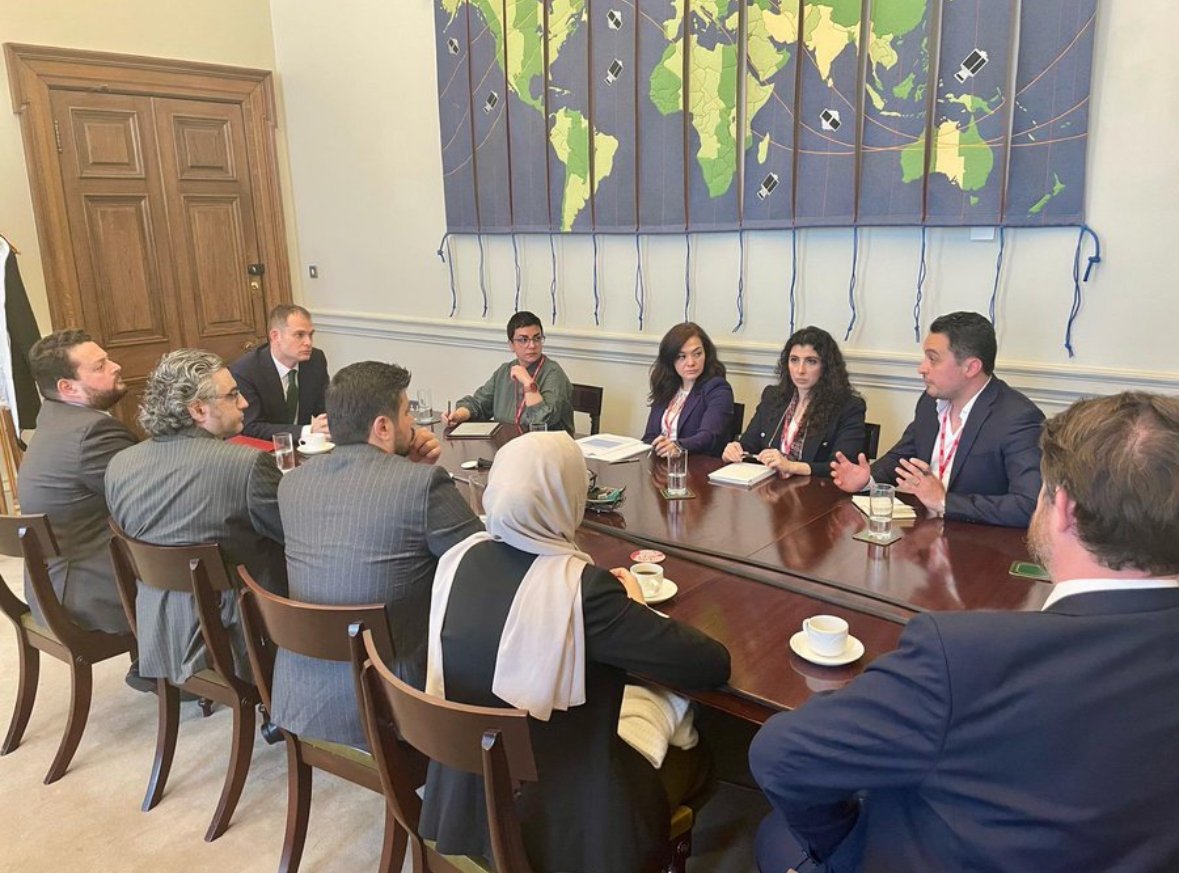
Meeting with the British Minister for Middle East Affairs
Upon invitation by the British Minister for Middle East Affairs, Madaniya, alongside other Syrian organisations, participated in discussions focusing on recent political developments, civil society issues, and human rights in Syria. Key Syrian demands raised during the meeting included the immediate lifting of sectoral sanctions, particularly on energy and banking sectors; increased humanitarian and service-based support; reopening of the British Embassy in Damascus; and backing Syrian-led initiatives aimed at justice, peace, and social cohesion. Meeting with the EU Delegation in Damascus
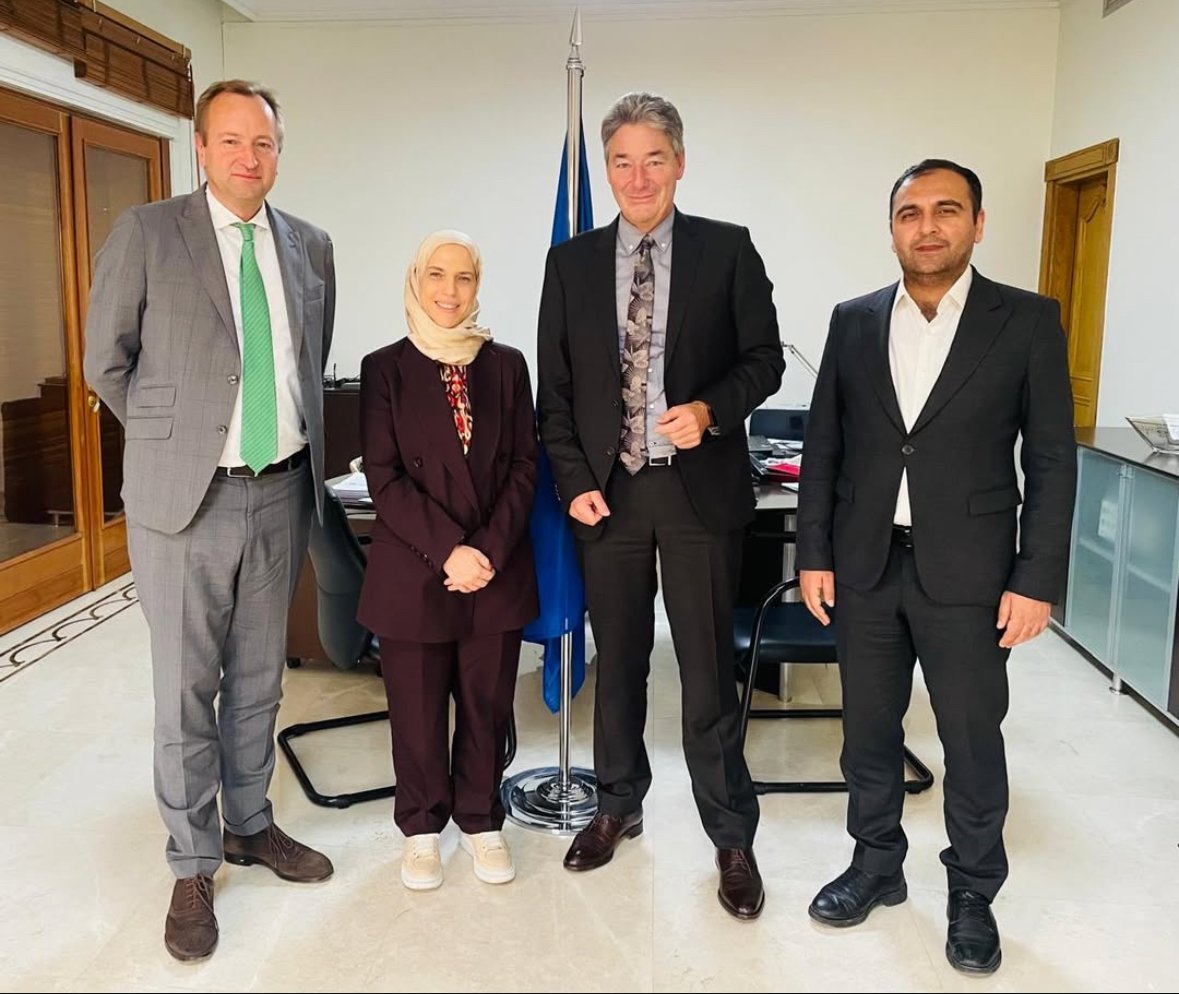
Represented by members of its Board, Madaniya met with the EU Special Envoy to Syria in Damascus. The meeting involved presenting Madaniya’s work and updates on its programmes, as well as exploring future cooperation. Discussions particularly focused on Madaniya potentially supporting the EU, through its membership network, in organising the Brussels Conference’s “Dialogue Day” inside Syria for the first time. Meeting with the Embassy of Cyprus in Damascus
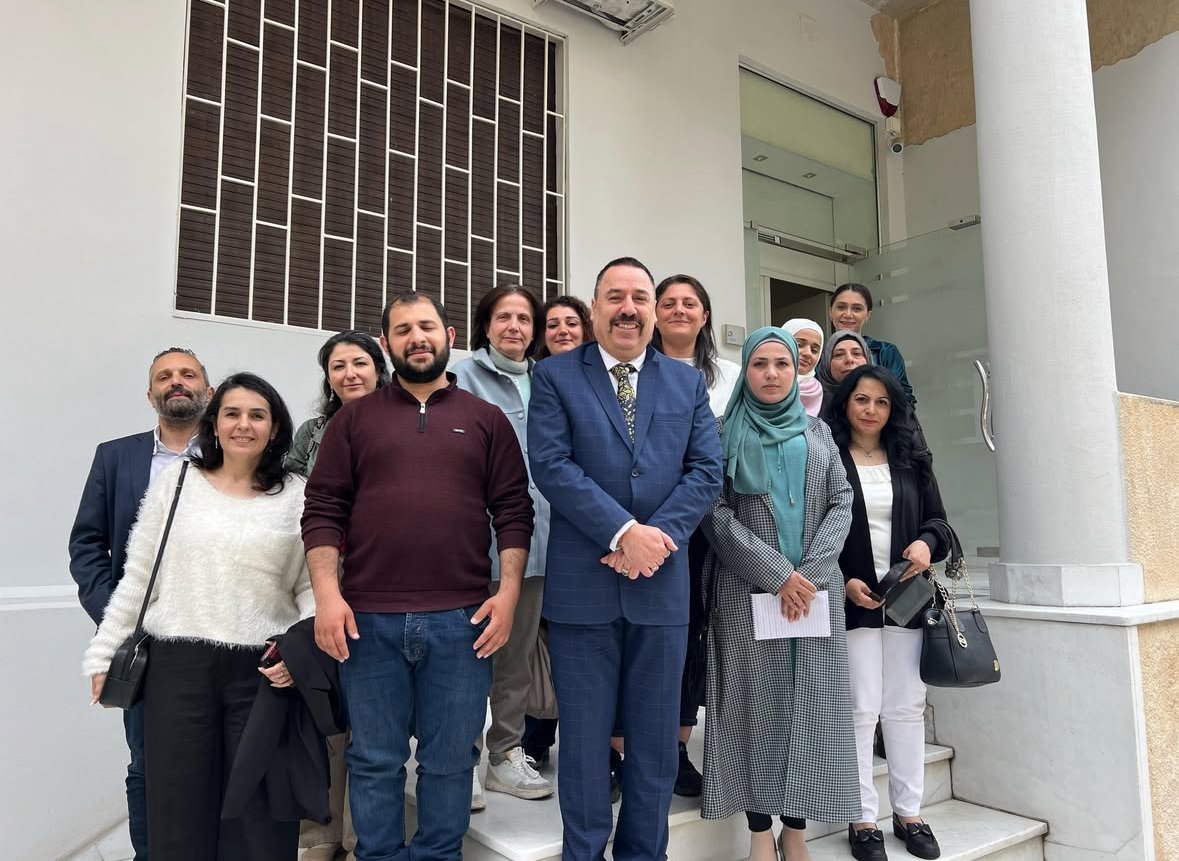
Madaniya organised a meeting between the Embassy of Cyprus in Damascus, representatives from Madaniya’s member organisations, and its Board members. The discussion addressed pressing issues such as lifting sanctions affecting civilians, transitional justice, refugee protection and prevention of forced returns, support for political transition and constitutional declaration, ensuring women's political participation, and enhancing the role of civil society organisations in shaping Syria’s future. Meeting with the Finnish Embassy Representative in Damascus
Madaniya met with the regional representative of the Finnish Embassy, who conducts diplomatic duties related to Syria through periodic visits to Damascus. The meeting aimed to introduce Madaniya’s work and programmes, highlighting the challenges faced by civil society amidst administrative and political changes in the country.
|
Madaniya’s Meetings with International Institutions In line with its commitment to strengthening coordination with international institutions involved in Syrian affairs, Madaniya recently organised a series of meetings with UN agencies and other international bodies. Discussions centred on justice and accountability, missing children, human rights issues, and the challenges of delivering services at the local level.
|
Meeting with the International Commission on Missing Persons (ICMP) Madaniya hosted the Head of the Children’s Division of the International Commission on Missing Persons at its Damascus office. The meeting addressed the situation of missing children across various contexts, including migration, detention centres, and orphanages such as "Lahn al-Hayat". Participants emphasised the importance of documenting cases and enhancing cooperation to determine the children’s fate and safeguard their rights. Meeting with the UN Department of Political and Peacebuilding Affairs (DPPA) Madaniya participated in a meeting involving several civil society organisations and representatives of the UN Department of Political and Peacebuilding Affairs. The discussions included an assessment of Syria’s political transition, highlighting associated opportunities and challenges, and underscored the critical role civil society plays in driving an inclusive and effective political process. Meeting between Madaniya Member Organisations and the Association of Netherlands Municipalities Madaniya organised a meeting at its headquarters in Damascus between several of its member organisations and representatives from VNG International (the international cooperation agency of the Association of Netherlands Municipalities), following the agency's official visits to Syria. Organisations outlined the challenges they face in delivering public services across various regions, exchanging ideas on ways to develop this sector and enhance local institutions' capacity to address residents' needs effectively. Meeting with the International, Impartial and Independent Mechanism (IIIM) Madaniya held a meeting with the Director of the International, Impartial and Independent Mechanism (IIIM), along with representatives from member human rights organisations, during his visit to Damascus. The discussion focused on transitional justice, emphasising the importance of coordination between civil society and international mechanisms to achieve accountability, particularly in the context of ongoing violations and the complexity of Syria’s legal and political landscape. Introductory Meeting with the UN Office of the High Commissioner for Human Rights (OHCHR) Madaniya hosted an introductory meeting with representatives from the Office of the UN High Commissioner for Human Rights. The dialogue explored ways to collaborate with Madaniya and its member organisations on issues related to justice, accountability, and victim support. Discussions also addressed developing project proposals rooted in human rights principles, aiming to enhance programme effectiveness and maximise their impact in the Syrian context.
|
Madaniya’s Meetings with Syrian Stakeholders As part of efforts to expand communication channels with local Syrian stakeholders and to strengthen national partnerships, Madaniya recently organised meetings aimed at exploring potential cooperation in civic and political activities, especially in areas undergoing significant social and administrative changes.
|
Madaniya’s Participation in a Session on the Associations Law at the Ministry of Social Affairs
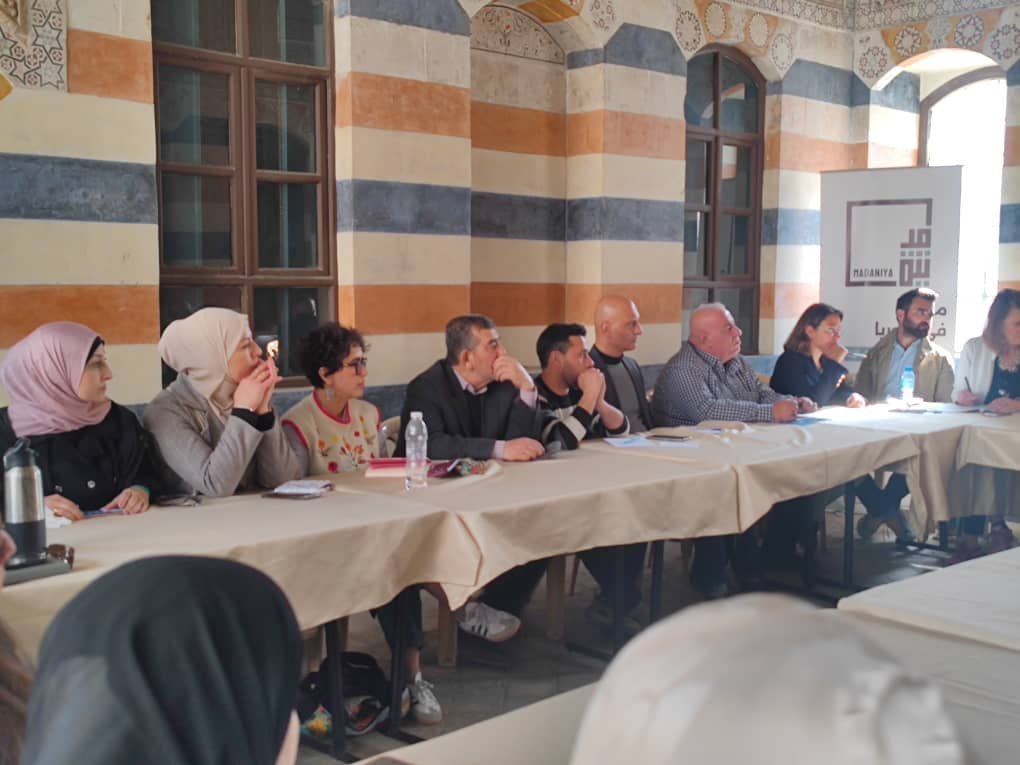
At the invitation of the Ministry of Social Affairs and several civil society organisations, Madaniya participated in a discussion hosted by the Ministry to review the Associations Law in light of the formation of the new government. The session provided an opportunity to exchange views on current challenges and necessary amendments, emphasising the importance of ensuring a legal environment that enables civil society work and protects its independence in the upcoming phase. Meeting with the Episcopal Christian Committee in Aleppo
Given the increasing engagement of the Christian community in civic and political affairs following recent changes in Aleppo, the Episcopal Christian Committee reached out to Madaniya for an introductory meeting. Discussions explored possible avenues of collaboration in civil governance, peacebuilding, and strengthening the role of religious groups in political and community processes. The meeting opened a constructive dialogue on mechanisms to include diverse societal groups in shaping a pluralistic and inclusive future for Syria.
|
Updates from Member Organisations
|
In this section, we highlight the achievements and developments of Madaniya’s member organisations. This month, we share details of recent and upcoming events held at Madaniya’s office in Damascus.
|
Bidaya Exhibition – Commemorating the Syrian Revolution
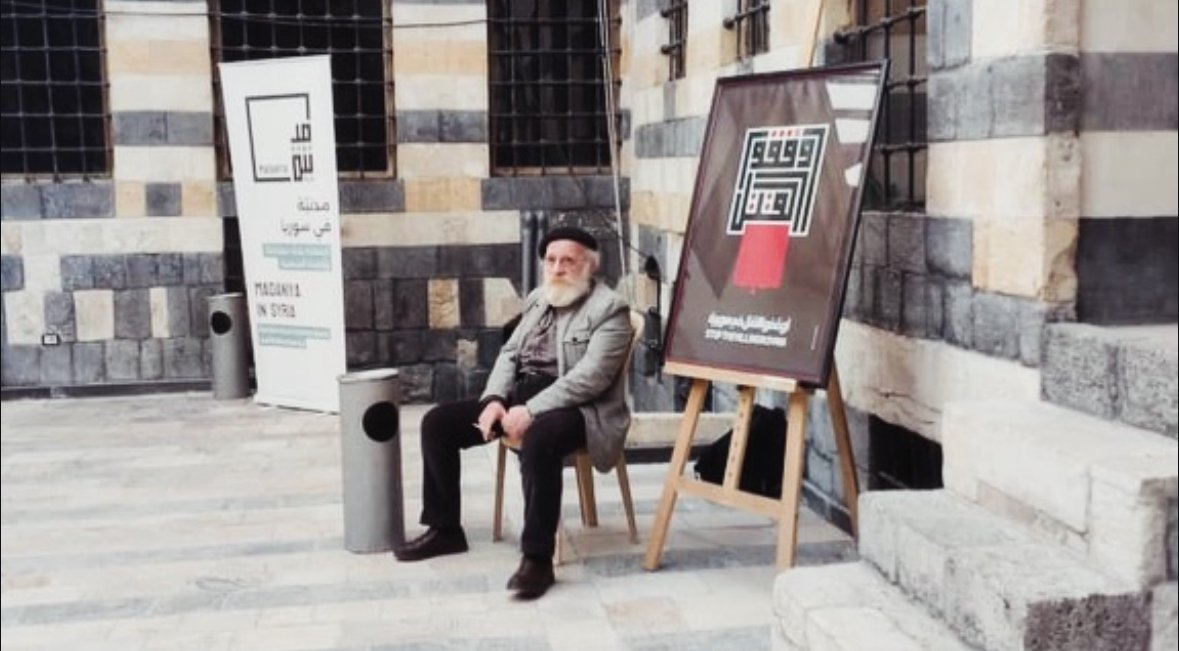
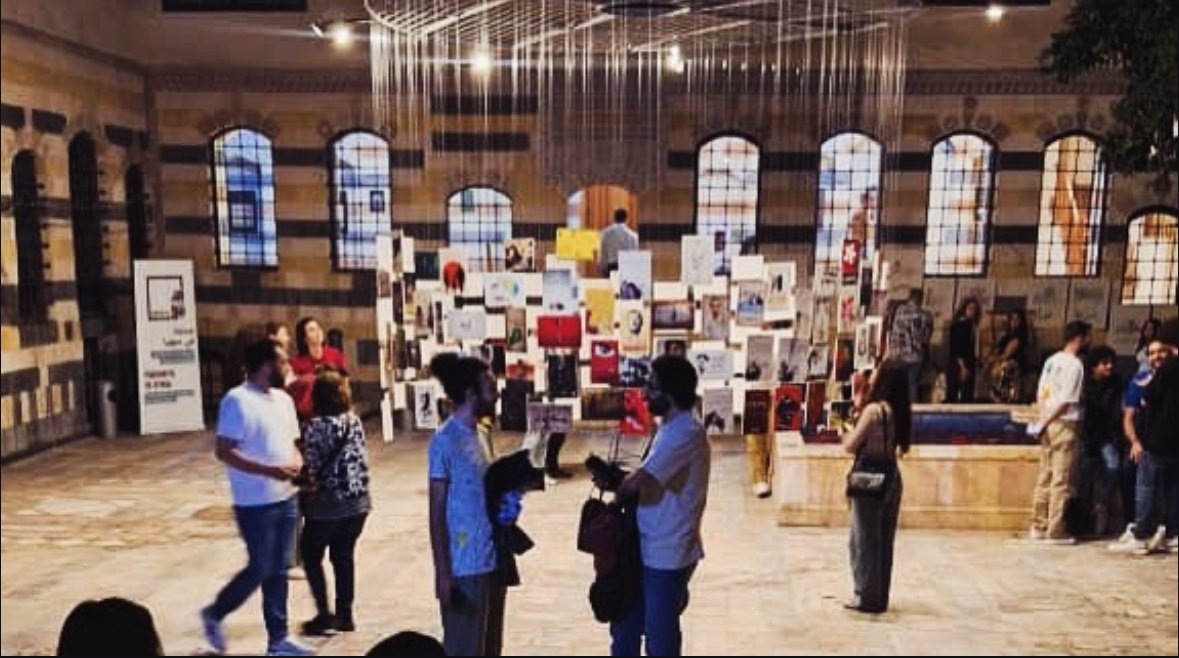
From 22 to 28 April, Madaniya hosted the Bidaya Exhibition to mark the anniversary of the Syrian revolution. Organised by different civil society groups and activists, the exhibition featured dozens of artworks, banners, and designs produced since 2011, drawn from the creative archives of the Syrian revolution and their original sources. Each day, documentary and cinematic films depicting aspects of the Syrian revolution were screened, followed by discussion sessions with filmmakers, offering attendees opportunities for collective reflection and dialogue about Syria’s past and future. Khaseb Conference | Steps for Building and Development
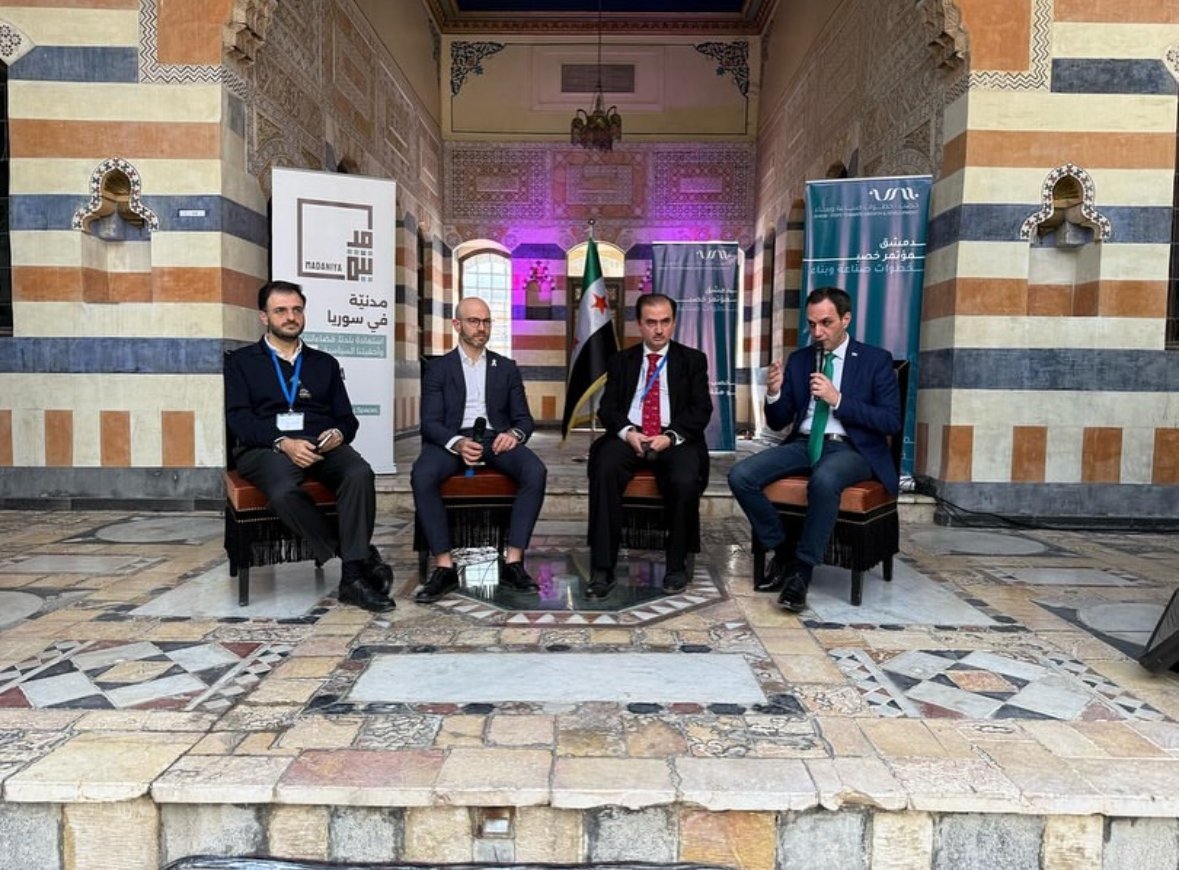
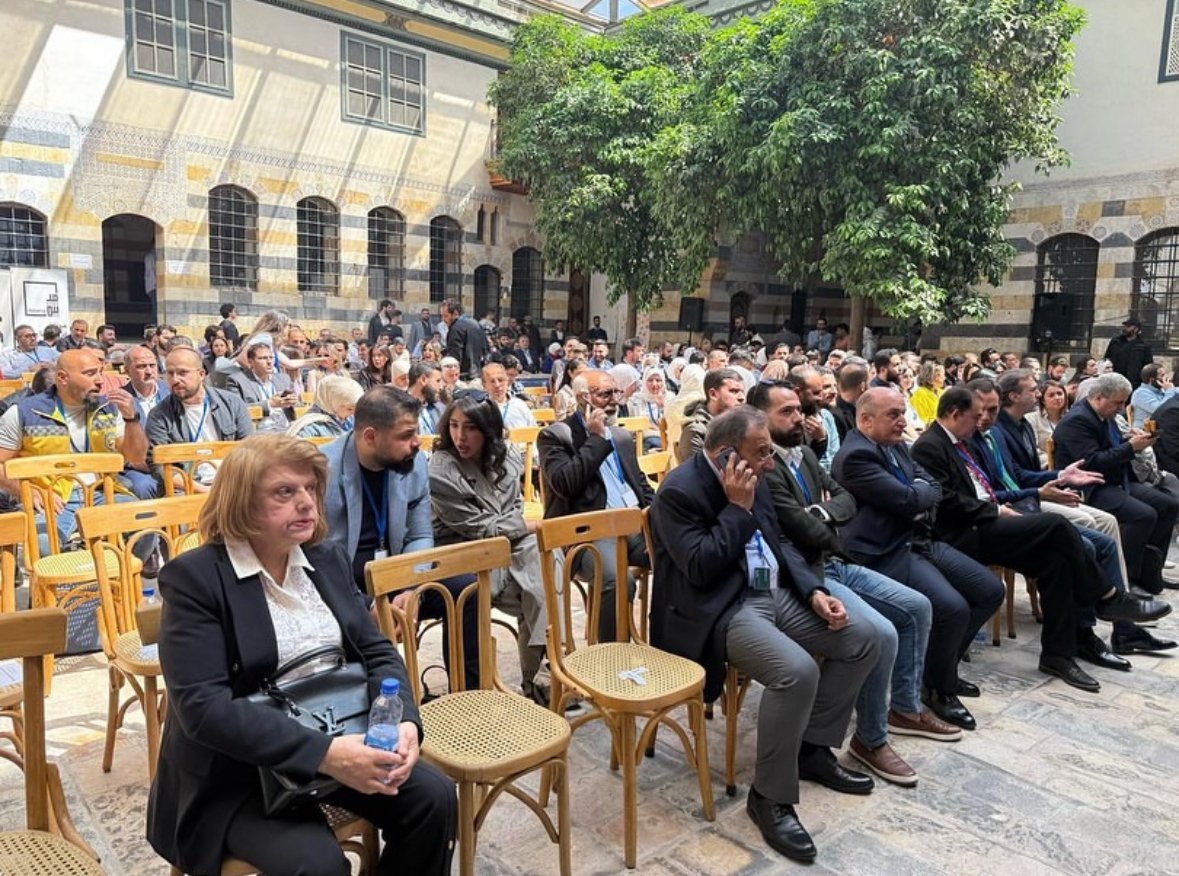
On 18 and 19 April, Madaniya hosted the Khaseb Conference, a two-day event designed to promote dialogue around enhancing digital and financial infrastructure in Syria. The conference featured participation from several government officials, including the Minister of Communications, the Head of the Economists' Union, and representatives from the Ministry of Finance, alongside representatives from private banks and public-benefit organisations such as the Syrian Technology Society. Civil society representatives also participated, discussing practical steps to create an economic and social environment supportive of sustainable development. Discussion Session on Reparations in Syria
Madaniya will host a discussion session at its Damascus office on Thursday, 8 May 2025, in collaboration with the Global Survivors Fund, an international organisation based in Geneva that supports reparations for survivors of conflict-related human rights violations. The fund works in partnership with local organisations to design and implement interim measures that restore dignity and recognition to victims. The session will explore several key themes regarding the future of reparations in Syria, notably: identifying appropriate and meaningful measures for the Syrian context, whether interim or long-term; lessons learned from Syrian civil society efforts in documentation, memory preservation, and accountability, and their alignment with the fund’s available tools. Discussions will also address which groups should be included in reparations mechanisms, such as survivors of detention, enforced disappearance, and their families, as well as other marginalised communities.
|
In this section, we highlight the latest reports and updates published by or about Syrian organisations over the past month.
|
Sectarian Escalation and Coordinated Targeting of the Druze Community in Syria – April 2025 A group of civil society organisations issued a detailed report documenting the alarming rise in sectarian violence in Rural Damascus and Suwayda Governorate in late April 2025. This escalation followed the leak of an audio recording allegedly attributed to a Druze cleric, containing offensive religious remarks. Although the Syrian Ministry of Interior denied the recording's authenticity and claimed it was fabricated, the incident sparked a wave of field violence and societal incitement, which began in Jaramana, Sahnaya, and Ashrafiyat Sahnaya, involving physical assaults, armed attacks, and targeted harassment of Druze university students. On 30 April, the escalation spread to Suwayda, where extremist groups launched coordinated attacks on several towns and villages, including heavy shelling, summary executions, and the large-scale forced displacement of residents in areas such as Hazm, Al-Surah, Rassas, and Ara. These events occurred amid an almost complete absence of government or humanitarian response, with indicators of involvement by armed factions supported by external actors, and a glaring failure on the part of official security forces—further fuelling chaos and a breakdown in protection. The report notes that these developments are unfolding within a broader context of state institutional collapse and its inability to protect civilians. This vacuum has enabled armed groups to exploit sectarian tensions. The report warns of the very real danger that these events could evolve into a full-scale sectarian conflict in southern Syria, especially given the fragility of social cohesion and the lack of meaningful deterrence for the perpetrators of violence. Furthermore, the report highlights the essential role of both local and international civil society in documenting the events, supporting relief efforts, and building effective coordination to address urgent displacement, medical, and psychosocial needs—particularly among women and children. To read the full report in English, follow the available link.
|
|
States’ Obligations under International Human Rights Law – Syrian Legal Development Programme Amid the escalating violence in Jaramana, Sahnaya, and Ashrafiyat Sahnaya, the Syrian Legal Development Programme published a report highlighting the legal obligations of states under international human rights law. The report outlines three core categories of obligations: the duty to respect, the duty to protect, and the duty to fulfil. It emphasises that a state’s responsibility is not limited to refraining from violating rights, but also includes the obligation to protect individuals from violations committed by non-state actors, such as armed groups or private individuals, as long as those affected fall within the state’s jurisdiction. The report underscores the importance of the duty to protect as a positive obligation, requiring states to take effective measures to prevent violations and respond when they occur. It identifies two key elements in this context: prevention, through the creation of a legal and societal environment that rejects hate speech and promotes a culture of human rights; and response, through swift intervention, accountability, and ensuring that perpetrators do not enjoy impunity. It also stresses the need to train state officials and security forces to uphold human rights and to integrate human rights standards across all levels of official conduct. The report argues that a state's failure to meet these obligations—whether in prevention or response—may incur international legal responsibility, even if the state itself did not commit the violation, particularly if it failed to take reasonable and appropriate steps to prevent harm or mitigate its effects. It concludes that the protection and fulfilment of human rights is a central responsibility of the state—one that requires political will, as well as clear institutional and legislative action. In the Syrian context, the report asserts that respect for these obligations is a vital entry point for building a future based on the rule of law, justice, and equality. To read the full report in Arabic, follow the available link. |
|
|
|
|
|
|
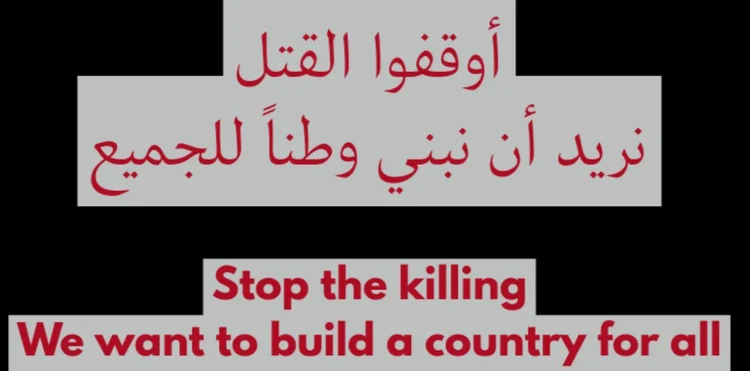
Surge in Sectarian Violence in Syria Threatens Civilian Lives and Undermines Stability – Press Release from the Syria Campaign The Syria Campaign issued a press release warning of escalating sectarian violence in Syria, particularly in the Jaramana and Sahnaya areas of Rural Damascus. Clashes between extremist armed factions and local groups have resulted in the deaths of dozens of people—including civilians and members of the General Security Forces—since Tuesday morning. These areas are home to a significant portion of the Druze community, and the escalation has raised fears of sectarian tensions erupting in densely populated, demographically mixed neighbourhoods. Despite an agreement reached on Tuesday evening between government representatives and community leaders in Jaramana, residents remain trapped in their neighbourhood due to sniper threats, while reports indicate that ambulances have been blocked from entering Sahnaya amid ongoing shelling. Jad Hammadeh, a resident of Jaramana, stated that the interim government bears responsibility for protecting civilians and preventing extremist factions from operating freely in the heart of the capital. He added that the lack of a clear and credible official narrative has only fuelled incitement against the Druze community. Rawiya Harb, an activist from Suwayda, noted that the public's lack of trust in the government's ability to protect civilians—or suspicions of its direct or indirect involvement in fuelling the conflict—combined with the absence of transparent official statements, has left a vacuum filled by unreliable media sources spreading disinformation and stoking sectarian mobilisation. She added that religious and community leaders in Suwayda and Jaramana have taken clear stances calling for calm and rejecting strife, but the failure of official bodies to offer decisive support for these calls has left space for extremist voices to dominate. Amid this escalation, Israel launched two strikes on Sahnaya, reportedly killing at least one General Security officer, according to the Ministry of Interior—further heightening tensions in southern Syria. Razan Rashidi, Executive Director of the Syria Campaign, described the government’s failure to rein in armed factions and curb sectarian hate speech as extremely dangerous. She stressed that Syria is at a critical juncture, with millions striving to build a free, stable, and democratic future. She added that the recent escalation—including the Israeli attacks—is deepening division and intensifying sectarian violence. To read the full press release, follow the available link. |
|
|
|
| | |

Comments